
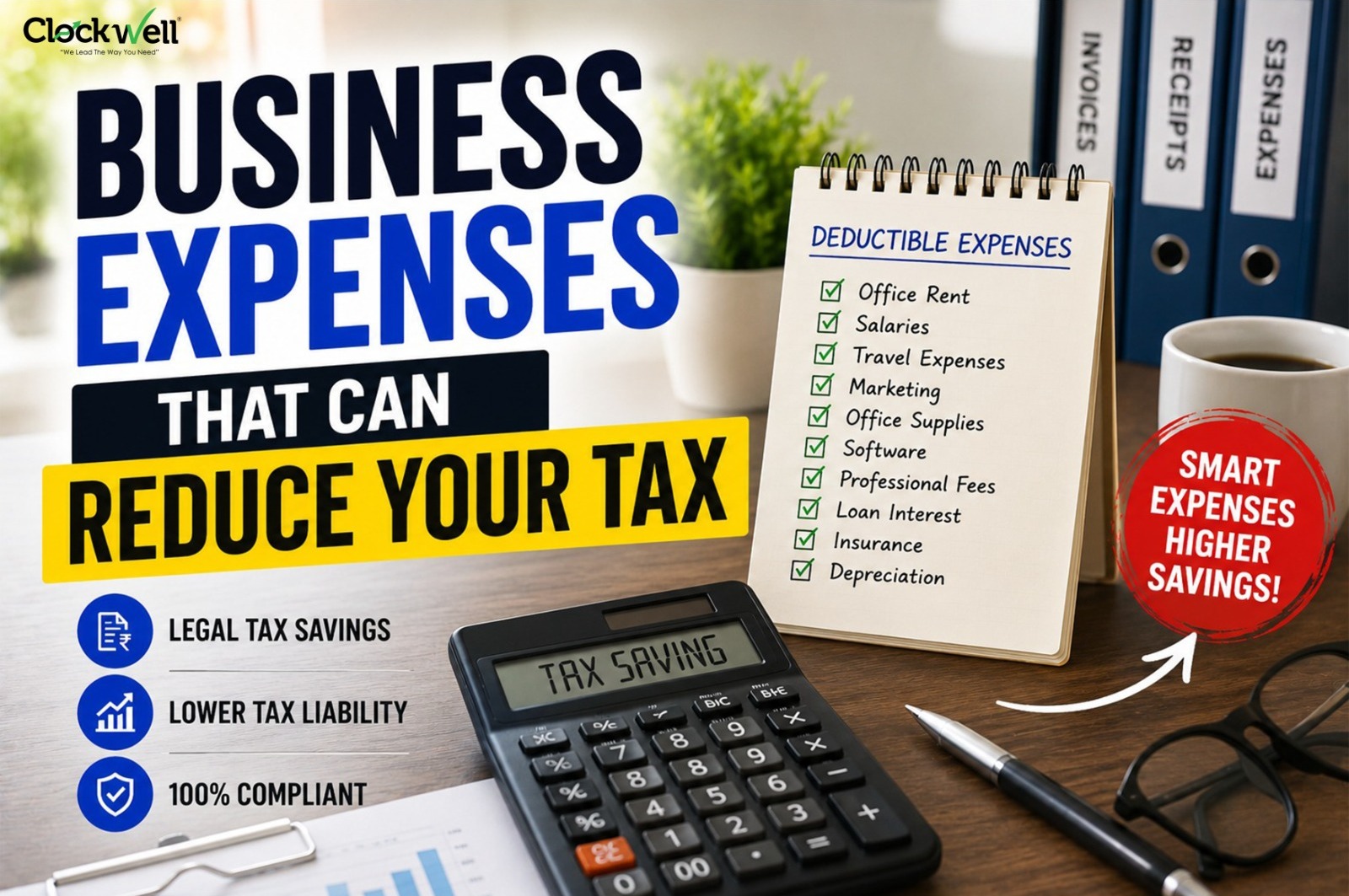
Many business owners pay more income tax than necessary simply because they are unaware of deductible business expenses. Understanding business expenses that can reduce your tax is essential for improving profitability and maintaining better financial control.
Proper expense management not only helps reduce tax liability but also improves cash flow and business planning.
This guide explains the most important business expenses you can legally claim to save tax.
What Are Business Expenses?
Business expenses are costs incurred while operating your business. These expenses are deducted from your total revenue to calculate taxable profit.
The lower your taxable profit, the lower your income tax liability.
However, expenses must be genuine, business-related, and properly documented.
Why Claiming Business Expenses is Important
Claiming expenses correctly helps businesses:
- Reduce taxable income
- Lower overall tax liability
- Improve profitability
- Maintain accurate financial records
- Avoid unnecessary tax payments
Many small businesses lose money by ignoring eligible deductions.
1. Office Rent and Utility Bills
Expenses related to office space are fully deductible.
Includes:
- Office rent
- Electricity bills
- Water charges
- Internet expenses
These are basic operational expenses necessary for running a business.
2. Employee Salaries and Benefits
Payments made to employees are considered business expenses.
Includes:
- Salaries
- Bonuses
- Incentives
- PF contributions
- Staff welfare expenses
Maintaining payroll records is important for compliance.
3. Business Travel Expenses
Travel expenses incurred for business purposes are deductible.
Includes:
- Flight tickets
- Hotel accommodation
- Local transportation
- Client meeting expenses
Personal travel expenses cannot be claimed.
4. Marketing and Advertising Costs
Promoting your business also helps reduce tax liability.
Includes:
- Social media ads
- Google ads
- Website development
- Branding and design expenses
- Printing and promotional materials
Marketing investments are fully deductible in most cases.
5. Office Equipment and Software
Expenses for tools and technology used in business operations are deductible.
Examples:
- Laptops and computers
- Printers
- Software subscriptions
- Accounting software
- Cloud storage services
Some assets may be claimed through depreciation.
6. Depreciation on Business Assets
Businesses can claim depreciation on long-term assets.
Assets Include:
- Machinery
- Furniture
- Vehicles
- Equipment
Depreciation spreads the cost of assets over multiple years.
7. Professional and Consultancy Fees
Fees paid to professionals are also deductible.
Includes:
- Chartered accountant fees
- Legal consultation charges
- Business advisory services
- Audit fees
These expenses are important for compliance and business management.
8. Loan Interest
Interest paid on business loans can reduce taxable income.
Includes:
- Working capital loan interest
- Business vehicle loan interest
- Machinery loan interest
Principal repayment is not deductible, but interest usually is.
9. Training and Skill Development
Employee training expenses are deductible if related to business growth.
Examples:
- Workshops
- Online courses
- Professional certifications
Investing in skills can also improve productivity.
10. Business Insurance
Insurance premiums paid for business protection are deductible.
Includes:
- Office insurance
- Professional liability insurance
- Employee insurance
Insurance helps manage business risks effectively.
Expenses You Cannot Claim
Certain expenses are not allowed as deductions.
Examples:
- Personal expenses
- Income tax paid
- Penalties and fines
- Personal travel costs
Mixing personal and business expenses can create compliance issues.
Common Mistakes Businesses Make
Many businesses fail to maximize deductions because of poor record management.
Common Errors:
- Not keeping invoices
- Missing small expenses
- Claiming personal expenses
- Ignoring depreciation benefits
- Poor bookkeeping
Accurate accounting is essential.
Tips to Maximize Tax Savings
To make the most of business expenses that can reduce your tax:
- Maintain proper books of accounts
- Keep digital copies of invoices
- Track expenses monthly
- Use accounting software
- Review expenses before year-end
Smart planning can significantly reduce tax burden.
How Clockwell Can Help
Managing expenses and tax compliance can be difficult without expert support.
Clockwell provides:
- Accounting and bookkeeping services
- Income tax filing
- Tax planning and advisory
- Expense management support
- Compliance solutions
With professional guidance, businesses can maximize deductions and stay compliant.
Understanding business expenses that can reduce your tax is essential for every business owner. Proper expense tracking and tax planning can improve profitability, reduce financial stress, and support long-term growth.
By claiming eligible deductions correctly and maintaining proper documentation, businesses can legally minimize tax liability and strengthen financial management.
Published on May 8, 2026