
Access to finance is one of the biggest factors that determine whether a business grows, survives, or struggles. Whether you're launching a startup, expanding your operations, purchasing machinery, or simply managing day-to-day expenses, choosing the right type of financing is essential.
Many entrepreneurs often come across two popular financing options:
- Business Loan
- Working Capital Loan
Although both provide financial assistance, they are designed for different purposes. Choosing the wrong loan can affect your cash flow, repayment capacity, and overall financial health.
In this guide, we'll explain the difference between Business Loans and Working Capital Loans, their benefits, eligibility, repayment structure, and how to determine which option best suits your business needs.
What is a Business Loan?
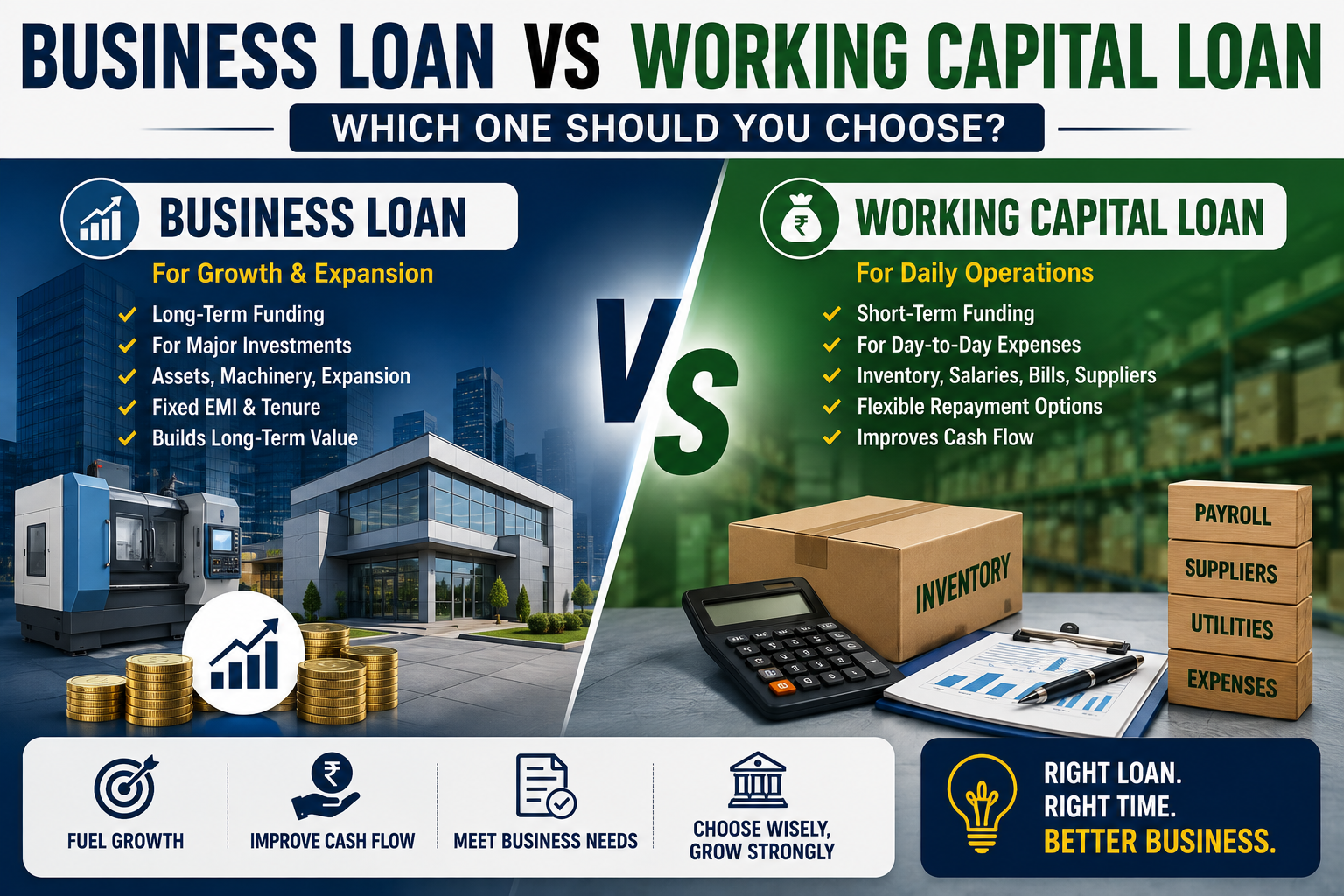
A Business Loan is a loan provided by banks and financial institutions to help businesses finance long-term growth, expansion, or capital investments.
Businesses typically use these loans for:
- Business expansion
- Purchasing machinery
- Buying commercial property
- Opening new branches
- Technology upgrades
- Factory setup
- Equipment purchase
- Business acquisition
Business loans are generally repaid over a fixed tenure through monthly instalments.
What is a Working Capital Loan?
A Working Capital Loan is a short-term financing solution designed to meet the day-to-day operational expenses of a business.
It helps businesses manage temporary cash flow gaps without interrupting normal operations.
Working capital loans are commonly used for:
- Salary payments
- Supplier payments
- Inventory purchases
- Utility bills
- Rent
- Short-term operating expenses
- Seasonal business requirements
Unlike business loans, these funds are generally intended for operational continuity rather than long-term investments.
Understanding the Difference
Although both loans provide funding, their purpose is very different.
A business loan helps you grow your business.
A working capital loan helps you run your business smoothly.
Understanding this distinction is the first step toward making the right financing decision.
Business Loan vs Working Capital Loan
| Feature | Business Loan | Working Capital Loan |
|---|---|---|
| Purpose | Long-term expansion | Day-to-day business operations |
| Loan Tenure | Usually longer | Usually shorter |
| Usage | Assets, expansion, equipment | Operational expenses |
| Repayment | Fixed EMIs | Depending on loan structure |
| Best For | Growth projects | Cash flow management |
| Investment Type | Capital expenditure | Operating expenditure |
When Should You Choose a Business Loan?
A Business Loan is generally suitable if your objective is long-term growth.
Examples include:
1. Opening a New Branch
Expanding into a new location requires investment in:
- Office space
- Furniture
- Equipment
- Staff
- Marketing
A business loan can help finance these costs.
2. Purchasing Machinery
Manufacturing businesses often require expensive machinery.
Rather than using working capital, businesses may finance equipment purchases through a business loan.
3. Buying Commercial Property
If you're purchasing an office, warehouse, or factory, a business loan may be more appropriate than a short-term loan.
4. Technology Upgrade
Businesses investing in:
- ERP software
- Manufacturing automation
- IT infrastructure
- Production systems
often choose business loans because these investments provide long-term benefits.
5. Business Expansion
If your company plans to increase production, enter new markets, or launch additional services, long-term financing may be the better option.
When Should You Choose a Working Capital Loan?
Working Capital Loans are ideal for short-term operational requirements.
1. Paying Employee Salaries
Sometimes businesses experience delayed customer payments while salary obligations remain fixed.
Working capital financing helps bridge this temporary gap.
2. Purchasing Inventory
Retailers often require additional stock before:
- Festivals
- Seasonal demand
- Promotional campaigns
Working capital loans provide immediate liquidity.
3. Managing Cash Flow
Even profitable businesses can experience temporary cash shortages.
Working capital loans help maintain uninterrupted operations.
4. Supplier Payments
Timely supplier payments strengthen business relationships and may help secure better pricing or credit terms.
5. Seasonal Businesses
Businesses such as:
- Tourism
- Agriculture
- Retail
- Textiles
often experience seasonal fluctuations.
Working capital loans help manage these cycles.
Advantages of Business Loans
Business loans offer several benefits:
- Supports long-term growth
- Helps purchase assets
- Enables business expansion
- Builds production capacity
- Creates long-term value
- Predictable repayment schedule
Advantages of Working Capital Loans
Working capital loans provide:
- Immediate liquidity
- Improved cash flow
- Smooth daily operations
- Better inventory management
- Timely supplier payments
- Business continuity during slow periods
Which Businesses Need Business Loans?
Business loans are commonly suitable for:
- Manufacturing companies
- Construction firms
- Healthcare businesses
- Educational institutions
- Hotels
- Restaurants
- Retail chains
- Logistics companies
- IT companies
- Growing startups
Which Businesses Need Working Capital Loans?
Working capital financing is commonly used by:
- Retail stores
- Wholesale traders
- Distributors
- Exporters
- Importers
- Small manufacturers
- Service businesses
- Restaurants
- Seasonal businesses
- E-commerce companies
Eligibility Factors
Lenders generally assess several factors before approving either type of loan, such as:
- Business vintage
- Annual turnover
- Profitability
- Credit history
- Cash flow
- Existing liabilities
- Financial statements
- GST compliance
- Income Tax Returns
- Bank statements
The exact eligibility criteria vary by lender and loan product.
Documents Commonly Required
Although documentation varies, businesses are often asked to provide:
- PAN Card
- Aadhaar Card
- Business Registration Certificate
- GST Registration
- Bank Statements
- Income Tax Returns
- Financial Statements
- KYC Documents
- Address Proof
- Business Proof
Additional documents may be required depending on the lender.
Common Mistakes Businesses Make
Many entrepreneurs choose the wrong financing option because they:
- Use long-term loans for routine expenses.
- Use working capital loans for major capital investments.
- Borrow more than necessary.
- Ignore repayment capacity.
- Fail to prepare financial statements.
- Do not compare loan products.
- Apply without proper documentation.
Careful planning can prevent unnecessary financial strain.
Questions to Ask Before Applying
Before selecting a loan, ask yourself:
- What is the purpose of the funds?
- Is the requirement short-term or long-term?
- Can the business comfortably manage repayments?
- Will the loan generate additional revenue?
- What is the expected return on investment?
- Are all financial records up to date?
The answers will help identify the most suitable financing option.
Why Financial Planning Matters
Securing finance is not just about getting approval—it is about ensuring the loan contributes to sustainable business growth.
Professional financial planning helps businesses:
- Estimate funding requirements.
- Improve cash flow.
- Manage debt responsibly.
- Prepare financial projections.
- Strengthen lender confidence.
- Reduce financial risks.
How Clockwell Can Help
At Clockwell, we assist entrepreneurs and businesses in making informed financial decisions through our advisory and compliance services.
Our services include:
- Business Financial Planning
- Loan Documentation Support
- Accounting & Bookkeeping
- GST Registration & Filing
- Income Tax Compliance
- Virtual CFO Services
- Business Advisory
- Financial Reporting
- Cash Flow Management
- Company Registration
- LLP Registration
- Startup Advisory
We help businesses prepare accurate financial records, improve lender readiness, and choose financing solutions that align with their long-term goals.
Choosing between a Business Loan and a Working Capital Loan depends entirely on why your business needs funding. If your goal is long-term growth—such as expanding operations, purchasing machinery, or investing in infrastructure—a business loan is generally the better choice. On the other hand, if you need funds to manage daily operational expenses, maintain cash flow, or handle seasonal demand, a working capital loan may be more appropriate.
Before applying for any type of finance, evaluate your business requirements, repayment capacity, and future growth plans. The right financing decision can improve business stability, support expansion, and strengthen your financial position.
If you're unsure which loan best suits your business, Clockwell can help you assess your financial needs, prepare the necessary documentation, and guide you toward the most suitable financing strategy for sustainable business growth.
Published on August 7, 2026