

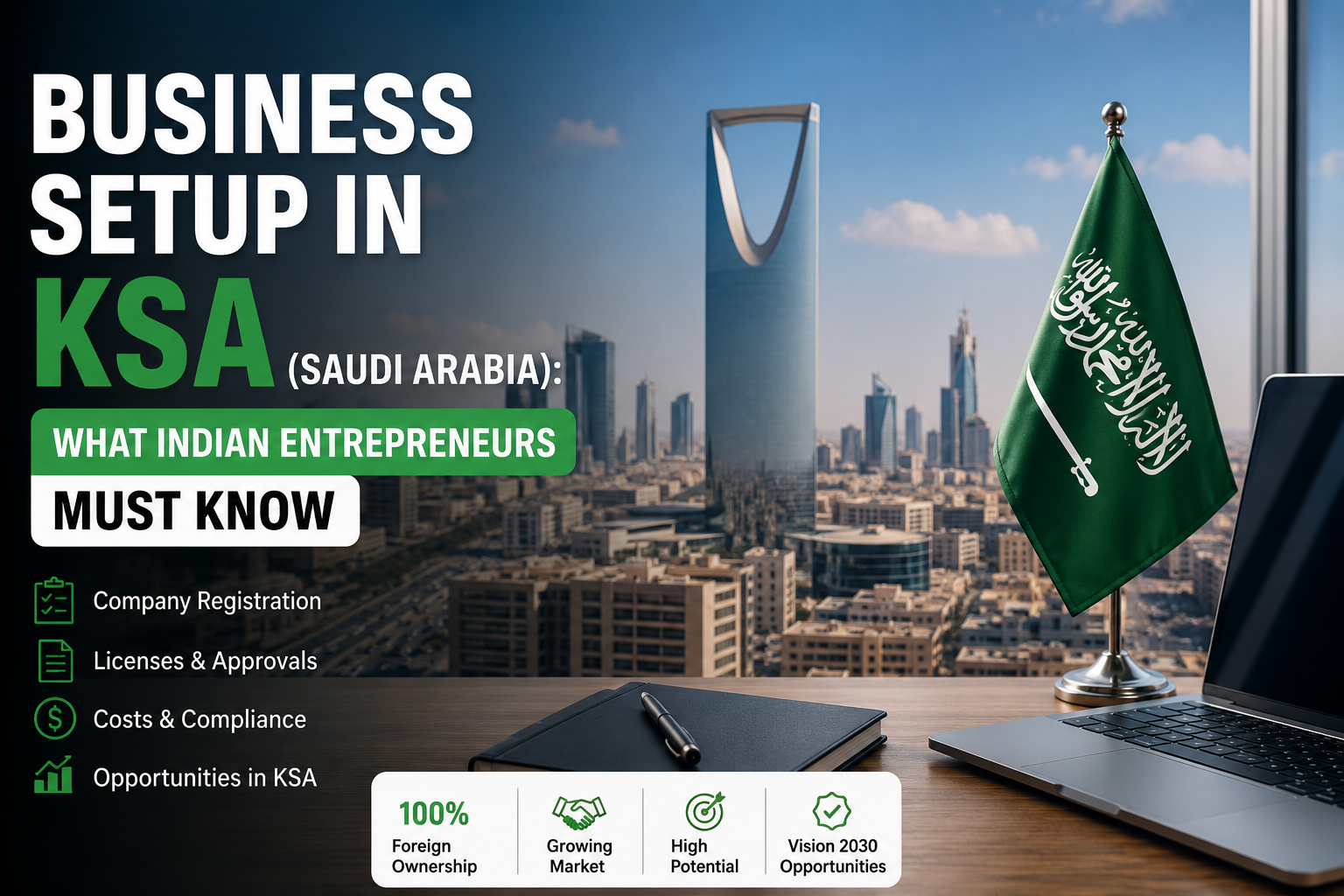
Saudi Arabia has rapidly transformed into one of the world's most attractive destinations for international investors. Under Vision 2030, the Kingdom is actively encouraging foreign investment by simplifying regulations, expanding economic sectors, and providing incentives for global entrepreneurs.
For Indian business owners, Saudi Arabia presents enormous opportunities across industries such as construction, information technology, healthcare, food services, retail, manufacturing, logistics, digital marketing, accounting, and professional consulting.
If you're an Indian entrepreneur planning to expand into the Middle East, this guide explains everything you need to know before starting your business in Saudi Arabia.
Why Saudi Arabia is Becoming a Business Hub
Saudi Arabia is no longer dependent solely on oil revenues. The government is investing billions into economic diversification, creating opportunities for foreign investors.
Major advantages include:
- Largest economy in the Middle East
- Population exceeding 38 million
- High purchasing power
- Strategic location connecting Asia, Europe, and Africa
- Strong government support for foreign investment
- Massive infrastructure and smart city projects
- Digital transformation across industries
For Indian entrepreneurs already operating in the UAE, expanding into Saudi Arabia can significantly increase market reach.
Can Indian Entrepreneurs Own a Business in Saudi Arabia?
Yes.
Recent reforms allow 100% foreign ownership in many sectors without requiring a Saudi partner.
However, ownership rules depend on:
- Business activity
- Investment category
- Ministry approvals
- Licensing requirements
Some regulated sectors may still have specific ownership conditions.
Popular Business Opportunities for Indians in KSA
Several industries continue to experience rapid growth.
1. IT & Software Services
Saudi Arabia is investing heavily in digital transformation.
Opportunities include:
- Software development
- AI solutions
- Cloud services
- Cybersecurity
- Mobile applications
- ERP implementation
2. Construction & Engineering
Mega projects continue to generate demand.
Examples include:
- Commercial buildings
- Infrastructure
- Project management
- Architecture
- MEP services
- Interior contracting
3. Accounting & Business Consultancy
Businesses require ongoing support for:
- Company formation
- VAT compliance
- Financial reporting
- Tax advisory
- Payroll services
- Audit support
4. Healthcare
Healthcare remains one of Saudi Arabia's fastest-growing sectors.
Investment opportunities include:
- Clinics
- Medical equipment
- Pharmacy chains
- Healthcare technology
- Diagnostic centers
5. Food & Hospitality
Demand continues to rise for:
- Restaurants
- Cafés
- Catering
- Cloud kitchens
- Food manufacturing
6. E-Commerce
Online shopping continues to expand rapidly.
Businesses include:
- Online retail
- Logistics
- Warehousing
- Marketplace services
- Digital marketing
Types of Business Entities in Saudi Arabia
Choosing the correct legal structure is one of the most important decisions.
Common business structures include:
Limited Liability Company (LLC)
Best suited for:
- Trading companies
- Service businesses
- Professional firms
- SMEs
Advantages:
- Separate legal identity
- Limited liability
- Flexible ownership
- Suitable for foreign investors
Branch Office
Ideal if your Indian company already exists.
Benefits:
- Operates under the parent company
- Easier expansion
- Brand continuity
Joint Stock Company (JSC)
Suitable for:
- Large businesses
- Major investments
- Public companies
Professional Company
Designed for licensed professionals such as:
- Accountants
- Engineers
- Architects
- Consultants
Business Registration Process in Saudi Arabia
The registration process generally includes the following steps.
Step 1: Choose Your Business Activity
Your selected activity determines:
- Required approvals
- License type
- Government authority
- Capital requirements
Step 2: Reserve Company Name
Your business name must comply with Saudi regulations and approval requirements.
Step 3: Obtain Investment Approval (If Required)
Certain foreign-owned businesses require approval from the relevant investment authorities before incorporation.
Step 4: Prepare Legal Documents
Typical documents include:
- Passport copies
- Articles of Association
- Board Resolution (for corporate shareholders)
- Power of Attorney
- Identity documents
- Address proof
Documents may require notarization and legalization.
Step 5: Register the Company
After approval, the company is officially incorporated.
Step 6: Obtain Commercial Registration (CR)
The Commercial Registration certificate officially recognizes your business.
Step 7: Register for VAT (If Applicable)
Businesses crossing the VAT registration threshold must register with the relevant tax authority.
Step 8: Open a Corporate Bank Account
A Saudi business bank account is required for operations.
Documents Required
Depending on your business structure, you may need:
- Passport copies
- Visa copies
- Photographs
- Company incorporation documents
- Memorandum of Association
- Board Resolution
- Power of Attorney
- Business plan
- Address proof
- Financial statements (for some investments)
Is VAT Applicable?
Yes.
Saudi Arabia currently levies 15% Value Added Tax (VAT) on most taxable goods and services.
Businesses meeting registration requirements must:
- Register for VAT
- Issue compliant tax invoices
- File VAT returns
- Maintain accounting records
Professional accounting support helps businesses remain compliant.
Corporate Tax Considerations
Tax obligations vary depending on factors such as:
- Ownership structure
- Business activity
- Shareholder nationality
- Applicable Saudi tax regulations
Professional tax planning is recommended before incorporation to ensure compliance and optimize the business structure.
Estimated Business Setup Costs
Costs vary depending on:
- Business activity
- License category
- Office requirements
- Government fees
- Professional service fees
- Immigration requirements
Obtaining a tailored quotation before starting the incorporation process helps avoid unexpected expenses.
Common Mistakes Indian Entrepreneurs Make
Many first-time investors experience delays because they:
- Choose the wrong business activity
- Submit incomplete documentation
- Ignore licensing requirements
- Underestimate compliance obligations
- Delay VAT registration
- Select an unsuitable legal structure
- Fail to obtain professional advice
Working with experienced business consultants can prevent costly errors.
Why Professional Assistance Matters
Business incorporation in Saudi Arabia involves multiple government departments, licensing requirements, documentation, and compliance obligations.
Professional consultants help with:
- Company registration
- Business licensing
- Document preparation
- Legal compliance
- VAT registration
- Accounting setup
- Corporate banking assistance
- Ongoing regulatory support
This allows entrepreneurs to focus on growing their businesses while remaining compliant with Saudi regulations.
Why Indian Businesses Are Expanding into Saudi Arabia
Saudi Arabia offers one of the strongest growth opportunities in the Middle East. Government reforms, major infrastructure investments, and a rapidly diversifying economy make the Kingdom an attractive destination for Indian entrepreneurs looking to establish or expand their international presence.
Whether you plan to launch a consulting firm, trading company, IT business, manufacturing unit, or retail venture, proper planning and regulatory guidance are essential for a smooth setup process.
If you're considering expanding into Saudi Arabia, partnering with an experienced business advisory firm can simplify the entire journey—from choosing the right company structure to securing licenses and ensuring ongoing compliance—helping you establish your business with confidence.
Published on July 22, 2026