

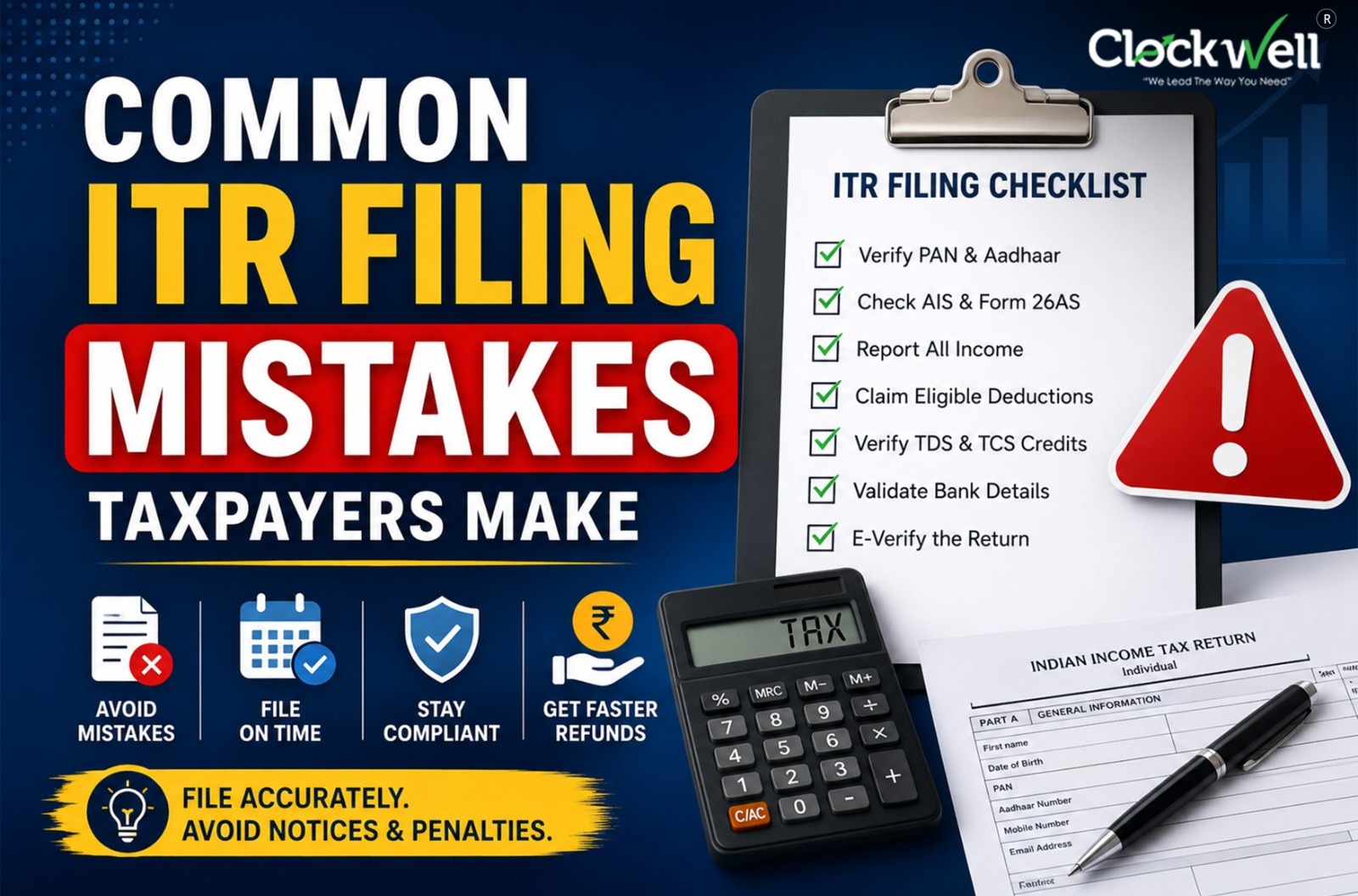
Filing an Income Tax Return (ITR) is an important responsibility for every taxpayer. While the process has become easier through online filing, many taxpayers still make mistakes that can result in delayed refunds, notices from the Income Tax Department, or even penalties.
A small error in your ITR can create unnecessary complications. Understanding the most common ITR filing mistakes can help ensure accurate filing and a hassle-free tax experience.
Why Accurate ITR Filing Matters
Correct ITR filing helps:
- Avoid income tax notices
- Receive refunds faster
- Maintain tax compliance
- Improve financial credibility
- Prevent penalties and interest
Taking a little extra care while filing can save significant time and money later.
1. Choosing the Wrong ITR Form
One of the most common mistakes is selecting the incorrect ITR form.
Different taxpayers require different forms depending on:
- Salary income
- Business income
- Capital gains
- Rental income
- Foreign income
Using the wrong form may result in return rejection.
2. Not Reporting All Sources of Income
Many taxpayers report only salary income and forget other income sources.
Commonly missed income includes:
- Bank interest
- Fixed Deposit interest
- Rental income
- Freelance income
- Capital gains
- Dividend income
Always disclose all income sources while filing.
3. Ignoring AIS and Form 26AS
AIS (Annual Information Statement) and Form 26AS contain important tax information.
Before filing:
✔ Review AIS
✔ Check Form 26AS
✔ Verify TDS details
✔ Match reported income
Ignoring these records may create mismatches and notices.
4. Claiming Incorrect Deductions
Some taxpayers claim deductions without proper eligibility.
Examples include:
- Section 80C investments
- Health insurance deductions
- Home loan benefits
- Education loan deductions
Incorrect claims can trigger scrutiny.
5. Incorrect Personal Information
Simple errors such as:
- Wrong PAN
- Incorrect Aadhaar details
- Invalid bank account information
- Incorrect mobile number
can create filing and refund issues.
Always verify personal information carefully.
6. Not Verifying the Return
Many taxpayers file their return but forget to verify it.
An unverified return is considered incomplete.
Verification can be completed through:
- Aadhaar OTP
- Net Banking
- Bank Account Validation
- Digital Signature
Always complete the verification process.
7. Missing TDS and TCS Credits
Taxpayers often forget to claim:
- TDS credits
- TCS credits
- Advance tax payments
This can increase tax liability unnecessarily.
Always reconcile credits before submission.
8. Filing After the Due Date
Late filing can result in:
- Penalties
- Interest charges
- Delayed refunds
- Loss of certain benefits
File your return well before the deadline.
9. Incorrect Bank Account Details
Refunds are processed directly to the bank account provided in the return.
Incorrect account details can lead to:
- Refund failures
- Processing delays
- Additional compliance issues
Verify account information before submission.
10. Not Maintaining Supporting Documents
Keep records such as:
- Form 16
- Investment proofs
- Bank statements
- Insurance receipts
- Home loan certificates
These documents may be required later.
Common Consequences of ITR Filing Mistakes
Mistakes can lead to:
- Income Tax Notices
- Refund Delays
- Additional Tax Liability
- Penalties
- Scrutiny Assessments
Most of these issues can be avoided through proper review.
ITR Filing Checklist
Before submitting your return:
✔ Verify PAN and Aadhaar
✔ Check AIS and Form 26AS
✔ Report all income sources
✔ Claim eligible deductions only
✔ Verify TDS and TCS credits
✔ Validate bank account details
✔ E-verify the return
Following this checklist reduces filing errors.
How Clockwell Can Help
Clockwell provides:
- Income Tax Return Filing
- Tax Planning Services
- TDS & TCS Reconciliation
- Tax Notice Assistance
- Business and Individual Tax Advisory
Our experts ensure accurate filing and help taxpayers avoid costly mistakes.
ITR filing mistakes are more common than many taxpayers realize. Even a small error can result in notices, delayed refunds, or additional tax liabilities.
By reviewing your information carefully, checking AIS and Form 26AS, and seeking professional assistance when needed, you can file your return confidently and accurately.
The best tax strategy is simple: File accurately, file on time, and stay compliant.
Published on June 19, 2026