
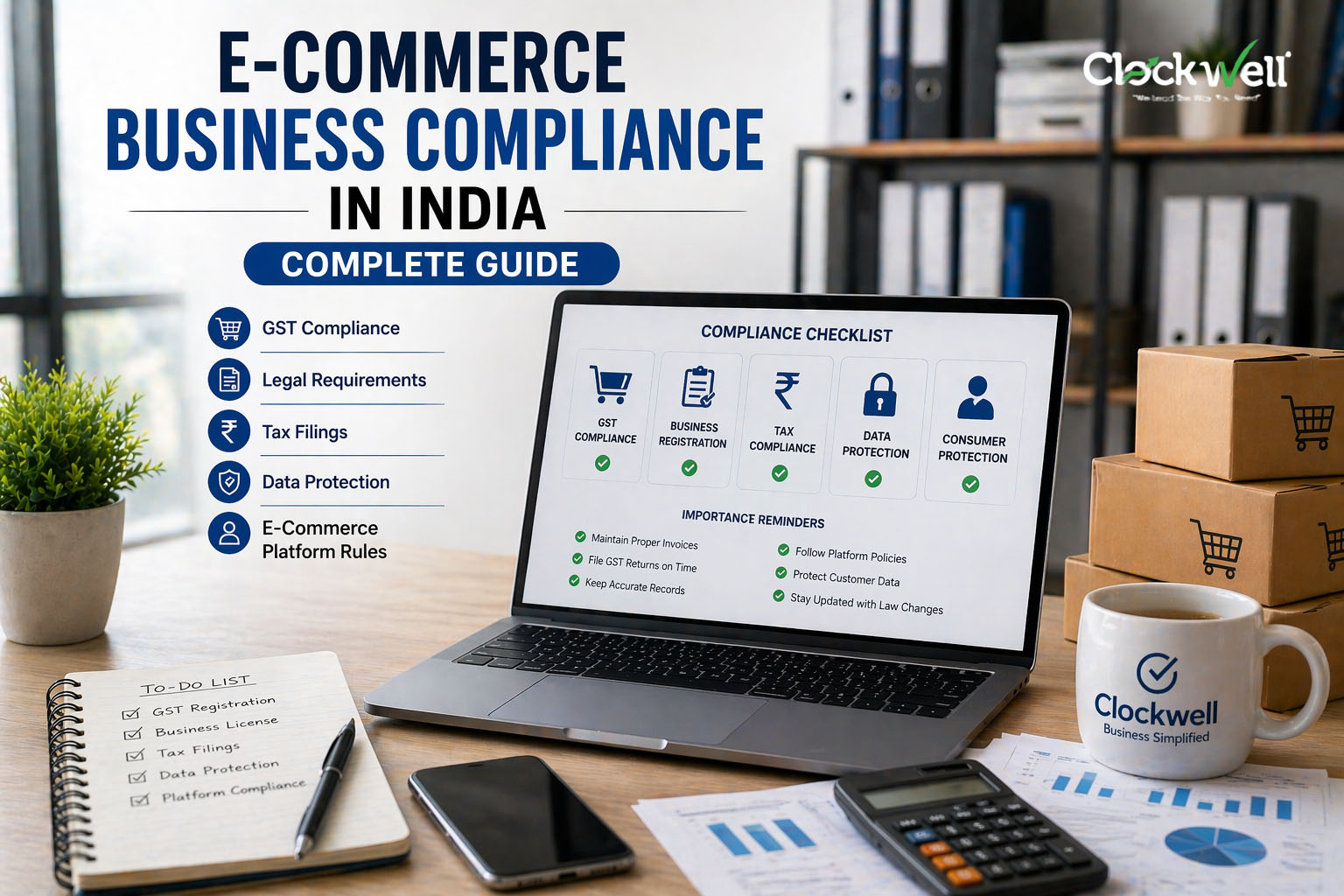
The e-commerce industry in India is growing rapidly, with thousands of new sellers joining platforms like Amazon, Flipkart, and Shopify every day. While starting an online business is easier than ever, staying legally compliant is equally important. Understanding e-commerce business compliance in India helps you avoid penalties, build trust, and run your business smoothly.
This guide explains all the key compliance requirements every e-commerce business owner should know.
What is E-Commerce Business Compliance?
E-commerce compliance refers to the legal and regulatory requirements that online businesses must follow to operate legally in India. These include tax registration, business licensing, data protection, and platform-specific rules.
Whether you sell through marketplaces or your own website, compliance is mandatory to avoid legal issues.
Business Registration Requirements
Before starting an e-commerce business, you need to choose a proper business structure. Common options include:
- Sole Proprietorship
- Partnership Firm
- Limited Liability Partnership (LLP)
- Private Limited Company
While small sellers may start as proprietors, growing businesses often prefer LLP or private limited structures for better scalability and credibility.
GST Registration for E-Commerce Sellers
GST registration is mandatory for most e-commerce sellers, regardless of turnover.
Key Points:
- Required for selling on platforms like Amazon and Flipkart
- Mandatory for interstate supply
- Needed to collect and pay GST
E-commerce operators also collect TCS (Tax Collected at Source), which makes GST compliance even more important.
TCS (Tax Collected at Source)
E-commerce platforms collect TCS on behalf of sellers and deposit it with the government.
What Sellers Must Do:
- Track TCS deductions
- Reconcile TCS with GST returns
- Claim credit while filing returns
Failure to manage TCS properly can lead to mismatches and notices.
Income Tax Compliance
E-commerce sellers must also comply with income tax regulations.
This includes:
- Maintaining proper accounting records
- Filing income tax returns annually
- Reporting profits accurately
Proper tax planning helps reduce liabilities and ensures compliance.
Legal Licenses and Registrations
Depending on your business type, additional licenses may be required:
- Shop and Establishment License
- Import Export Code (for international selling)
- FSSAI License (for food-related products)
- Trademark registration (for brand protection)
These licenses ensure your business operates legally in specific sectors.
Data Protection and Privacy Rules
If you run your own website, you must comply with data protection laws.
Requirements include:
- Privacy policy
- Terms and conditions
- Secure payment gateways
- Customer data protection
Building trust with customers is essential for long-term success.
Platform Compliance (Amazon, Flipkart, etc.)
Marketplaces have their own rules that sellers must follow.
Common requirements:
- Accurate product listings
- Timely order fulfillment
- Return and refund policies
- Performance metrics
Failure to comply can lead to account suspension.
Accounting and Record Keeping
Maintaining proper financial records is critical for compliance.
You should track:
- Sales and revenue
- Expenses
- GST invoices
- Inventory
Good accounting practices help in tax filing and business analysis.
Common Mistakes to Avoid
Many sellers face issues due to lack of awareness. Common mistakes include:
- Not registering for GST
- Ignoring TCS reconciliation
- Poor record keeping
- Not filing returns on time
- Using incorrect business structure
Avoiding these mistakes ensures smooth operations.
Benefits of Proper Compliance
Following e-commerce business compliance in India offers several advantages:
- Avoid penalties and legal issues
- Build trust with customers
- Improve business credibility
- Enable smooth scaling
- Access financial support and loans
Compliance is not just a requirement, but a growth enabler.
How Clockwell Can Help
Managing compliance for an e-commerce business can be complex, especially for new sellers. Professional support ensures accuracy and saves time.
Clockwell provides:
- GST registration and filing
- TCS reconciliation support
- Business registration services
- Accounting and tax compliance
- Legal advisory
With expert guidance, you can focus on growing your online business while staying fully compliant.
E-commerce business compliance in India is essential for running a successful and legally secure online business. From GST registration to income tax filing and platform rules, every aspect plays a crucial role.
By understanding the requirements and avoiding common mistakes, you can build a strong foundation for your business. Staying compliant not only protects your business but also helps it grow confidently in a competitive market.
Published on April 23, 2026