

The food industry in India is growing faster than ever. From cloud kitchens and home-based food businesses to restaurants, supermarkets, cafes, bakeries, food manufacturers, and online food delivery brands, thousands of new businesses enter the market every year.
However, before selling any food product legally in India, one important requirement cannot be ignored—the FSSAI License.
Whether you're starting a small homemade pickle business, opening a restaurant, launching a packaged food brand, or operating a large food manufacturing company, obtaining an FSSAI License is one of the first legal steps.
For businesses like Bella Chickens, Choco Bliss, and other food brands, an FSSAI License not only ensures legal compliance but also builds customer confidence and strengthens brand credibility.
In this comprehensive guide, you'll learn everything about the FSSAI License, including who needs it, the different license types, eligibility criteria, required documents, fees, application process, renewal procedure, penalties, and frequently asked questions.
What is an FSSAI License?
FSSAI stands for the Food Safety and Standards Authority of India.
It is the regulatory body established under the Food Safety and Standards Act, 2006, responsible for ensuring that food sold in India is safe, hygienic, and meets prescribed quality standards.
An FSSAI License is an official approval issued to food businesses that comply with food safety regulations.
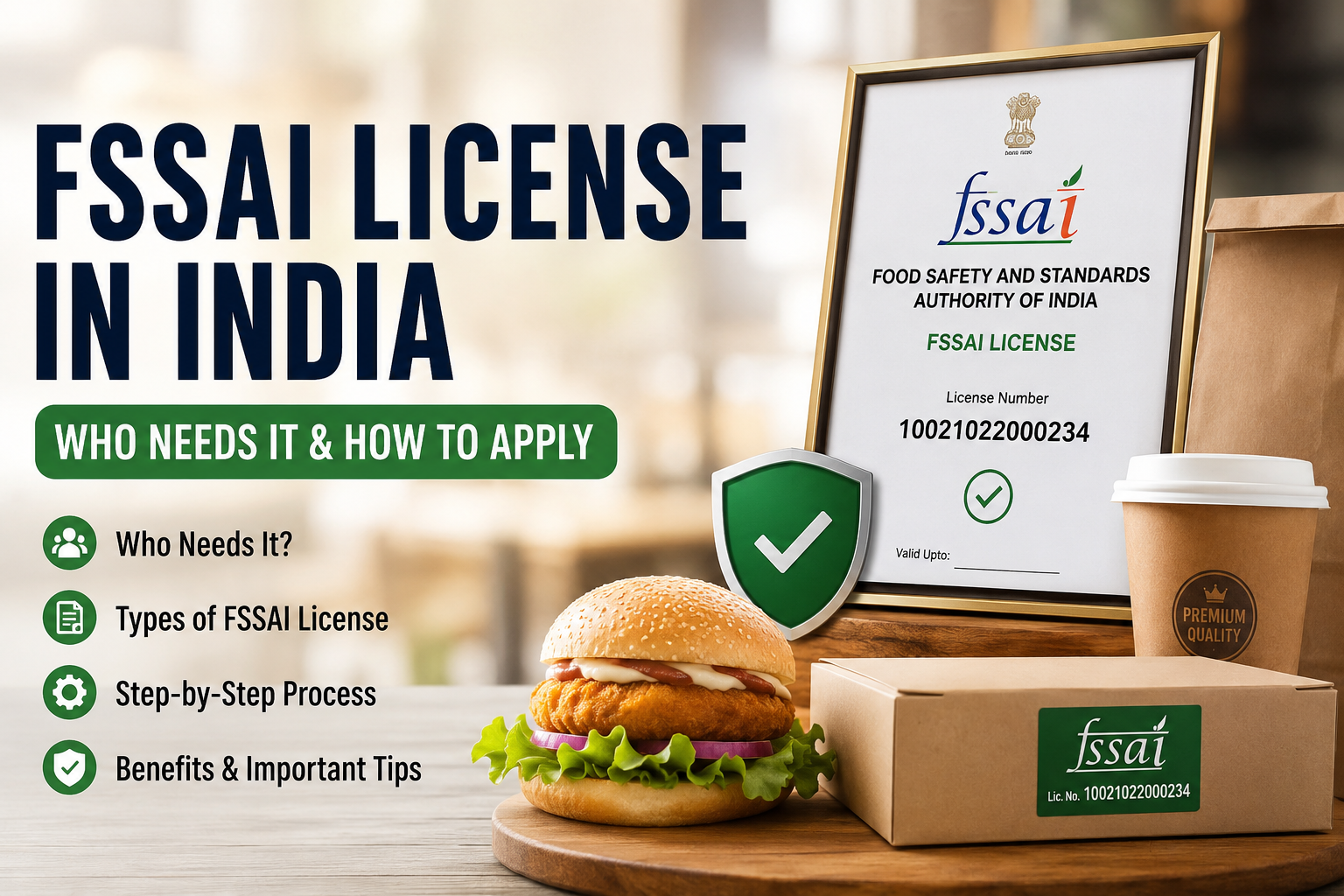
Every licensed business receives a unique 14-digit FSSAI License Number, which must be printed on food packages, invoices, labels, and displayed at the business premises where applicable.
Why is an FSSAI License Important?
Obtaining an FSSAI License offers several benefits beyond legal compliance.
Legal Recognition
Running a food business without the required license may lead to penalties, business closure, or legal action.
Customer Trust
Consumers are more likely to purchase products from businesses displaying an FSSAI License number.
Better Brand Image
An FSSAI-certified business appears more professional and reliable.
Business Expansion
Many distributors, supermarkets, and e-commerce platforms require suppliers to have an FSSAI License.
Easier Government Compliance
An FSSAI License is often required while applying for:
- GST Registration
- Trade License
- MSME Registration
- Business Loans
- Food Delivery Platform Registration
Who Needs an FSSAI License?
Almost every business involved in the food supply chain requires an FSSAI Registration or License.
This includes:
Restaurants
All restaurants serving food to customers.
Cafes and Coffee Shops
Small cafes, tea shops, juice bars, and coffee outlets.
Bakeries
Businesses manufacturing cakes, pastries, breads, and cookies.
Home-Based Food Businesses
People selling homemade food, snacks, pickles, chocolates, or bakery products.
Cloud Kitchens
Businesses operating through Swiggy, Zomato, or their own delivery platforms.
Food Manufacturers
Companies producing packaged food products.
Food Processing Units
Businesses involved in cleaning, processing, packing, or preserving food.
Wholesalers
Food wholesalers supplying retailers.
Retail Shops
Supermarkets, grocery stores, and food retailers.
Hotels
Hotels serving food and beverages.
Catering Businesses
Marriage catering, event catering, and outdoor catering services.
Food Importers & Exporters
Businesses importing or exporting food products.
Dairy Businesses
Milk collection, processing, and dairy product manufacturing.
Meat & Poultry Businesses
Chicken shops, meat processing units, seafood businesses, and frozen food manufacturers.
Sweet Shops
Sweet manufacturers and confectionery businesses.
Ice Cream Manufacturers
Businesses manufacturing or selling ice cream.
Food Transporters
Businesses transporting food products.
Storage & Warehousing
Cold storage and food warehouses.
Types of FSSAI Licenses
There are three categories of FSSAI registration.
1. Basic FSSAI Registration
Suitable for:
- Small food businesses
- Home kitchens
- Small retailers
- Petty manufacturers
Annual Turnover: Up to ₹12 Lakhs
Ideal for startups and small businesses entering the food industry.
2. State FSSAI License
Suitable for medium-sized businesses operating within one state.
Applicable for:
- Restaurants
- Mid-sized manufacturers
- Distributors
- Storage units
- Transporters
Annual Turnover: ₹12 Lakhs to ₹20 Crores (subject to business category and applicable regulations)
3. Central FSSAI License
Required for:
- Large manufacturers
- Food exporters
- Food importers
- Multi-state businesses
- Large warehouses
- E-commerce food operators
- Businesses supplying government agencies
Typically applicable for businesses with turnover above ₹20 Crores or those specifically mandated under FSSAI regulations.
Documents Required for FSSAI License
The required documents depend on the license category.
Generally, applicants need:
- Aadhaar Card
- PAN Card
- Passport-size Photograph
- Business Address Proof
- Rental Agreement or Ownership Proof
- Electricity Bill
- Partnership Deed (if applicable)
- Certificate of Incorporation (for companies)
- GST Certificate (if available)
- Food Safety Management System (FSMS) Plan
- List of Food Products
- Machinery Details
- Water Test Report (for manufacturers)
- NOC from Municipality (where applicable)
How to Apply for an FSSAI License in India
The application process is straightforward when all documents are ready.
Step 1: Determine Your License Type
Identify whether your business requires:
- Basic Registration
- State License
- Central License
Choosing the correct category is essential to avoid delays.
Step 2: Prepare Required Documents
Gather all supporting documents before beginning the application.
Ensure they are valid and up to date.
Step 3: Submit the Online Application
Apply through the official FSSAI online portal by selecting the appropriate registration category and filling in business details accurately.
Step 4: Upload Documents
Upload scanned copies of all required documents.
Incomplete or unclear documents may delay approval.
Step 5: Pay Government Fees
Fees vary depending on the license category and validity period.
Step 6: Verification
The Food Safety Department may verify the submitted information.
In some cases, an inspection of the business premises may be conducted.
Step 7: License Approval
After successful verification, the FSSAI License is issued.
The license number should be displayed at the business premises and printed on product labels wherever applicable.
FSSAI License Fees
Government fees vary depending on:
- License category
- Business type
- Manufacturing capacity
- Number of years selected
Since fee structures may be revised periodically, applicants should check the latest government schedule or consult a professional before applying.
FSSAI License Validity
Businesses can choose a validity period ranging from 1 to 5 years.
Longer validity reduces the need for frequent renewals.
FSSAI License Renewal
Renewal should be initiated before the license expires.
It is advisable to begin the renewal process well in advance to avoid penalties or disruption to business operations.
FSSAI Logo and License Number
Licensed food businesses must display:
- FSSAI Logo
- 14-digit License Number
These should appear on food packaging, labels, and invoices where required under applicable regulations.
Common Mistakes to Avoid
Many applications are delayed due to avoidable errors.
Some common mistakes include:
- Choosing the wrong license category
- Providing incorrect business details
- Uploading incomplete documents
- Using an incorrect business address
- Applying with expired identity documents
- Missing renewal deadlines
- Not maintaining food safety records
Penalties for Operating Without an FSSAI License
Running a food business without the required FSSAI registration or license can lead to serious consequences under the Food Safety and Standards Act.
Possible actions include:
- Monetary penalties
- Seizure of food products
- Suspension of business operations
- Cancellation of business activities
- Legal proceedings, depending on the nature and severity of the violation
Complying with FSSAI regulations helps businesses avoid these risks while ensuring consumer safety.
Benefits of Getting an FSSAI License
An FSSAI License offers several long-term advantages.
Builds Customer Confidence
Customers trust licensed businesses more.
Supports Business Growth
Helps expand into supermarkets, online marketplaces, and franchise models.
Improves Brand Reputation
Shows commitment to food quality and safety.
Simplifies Regulatory Compliance
Useful for obtaining various business registrations and approvals.
Enhances Market Opportunities
Many institutional buyers prefer dealing with licensed food businesses.
Facilitates Online Sales
Food delivery platforms and e-commerce marketplaces often require valid FSSAI registration details.
Why Food Businesses Should Apply Early
Whether you're launching a new café, bakery, cloud kitchen, poultry business, chocolate brand, or packaged food company, obtaining an FSSAI License at the beginning of your journey prevents unnecessary legal complications later.
Businesses such as Bella Chickens, Choco Bliss, restaurants, catering companies, and food manufacturers can benefit significantly by obtaining the appropriate license before commencing operations.
Early compliance also strengthens customer confidence, improves operational efficiency, and creates a strong foundation for long-term growth.
Frequently Asked Questions (FAQs)
Is an FSSAI License mandatory?
Yes. Most food businesses in India are required to obtain the appropriate FSSAI Registration or License based on their business size and activities.
Can I apply online?
Yes. The application process can be completed online through the official FSSAI portal.
Can home kitchens get an FSSAI License?
Yes. Home-based food businesses are generally eligible and often require Basic FSSAI Registration, depending on their scale of operations.
How long does approval take?
The timeline varies depending on the license category, document verification, and whether an inspection is required.
Can I sell food online without an FSSAI License?
No. Most online marketplaces and food delivery platforms require valid FSSAI registration or licensing before onboarding food sellers.
Is GST mandatory for obtaining an FSSAI License?
Not in every case. The requirement depends on the nature and turnover of the business, as well as applicable tax laws.
An FSSAI License is more than a legal formality—it is a mark of trust, quality, and professionalism. Whether you operate a home-based kitchen, restaurant, cloud kitchen, bakery, poultry business, chocolate brand, supermarket, food manufacturing unit, or export company, obtaining the correct FSSAI registration is essential for sustainable growth.
Applying for the appropriate license, maintaining compliance with food safety standards, and renewing it on time will help your business operate smoothly while building confidence among customers, distributors, and regulatory authorities.
If you're planning to start a food business or expand an existing one, securing your FSSAI License should be one of your first priorities. It lays the foundation for a compliant, credible, and successful food enterprise in India.
Published on July 3, 2026