

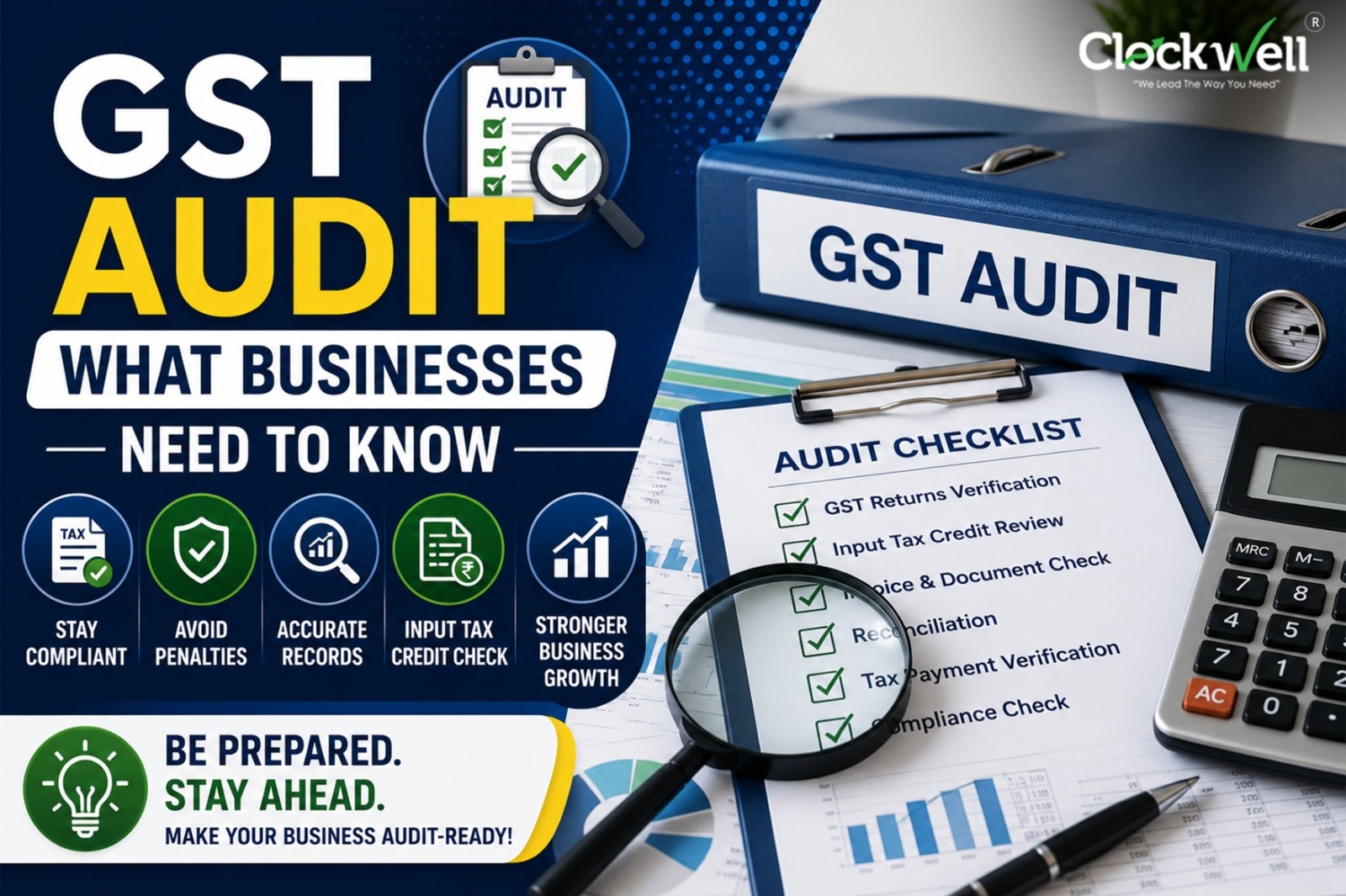
GST compliance is an essential part of running a business in India. As businesses grow and transactions increase, maintaining accurate GST records becomes increasingly important. One of the key compliance areas every business should understand is the GST audit.
A GST audit helps verify whether a business has correctly reported its GST transactions, paid the appropriate taxes, and maintained proper records as required under GST laws.
Understanding GST audit requirements can help businesses avoid penalties, notices, and compliance issues.
What is a GST Audit?
A GST audit is a detailed examination of a business's financial records, GST returns, invoices, and tax payments to verify compliance with GST regulations.
The audit ensures:
- Correct GST reporting
- Proper tax payments
- Accurate Input Tax Credit claims
- Compliance with GST laws
- Proper maintenance of records
The purpose is to identify discrepancies and ensure transparency.
Why is a GST Audit Important?
GST audits help businesses:
- Maintain compliance
- Identify reporting errors
- Avoid penalties
- Improve record management
- Strengthen financial controls
Regular internal reviews can significantly reduce audit risks.
Who Should Be Concerned About GST Audits?
Every GST-registered business should maintain records in a way that supports audit readiness.
This includes:
- Manufacturers
- Traders
- Service providers
- E-commerce businesses
- Small and medium enterprises
- Large corporations
Proper compliance is important regardless of business size.
Key Areas Reviewed During a GST Audit
1. GST Returns
Authorities may review:
- GSTR-1
- GSTR-3B
- Annual Returns
Consistency across filings is important.
2. Input Tax Credit (ITC)
Auditors verify:
- ITC eligibility
- Supporting invoices
- Vendor compliance
- GSTR-2B reconciliation
Incorrect ITC claims are one of the most common audit issues.
3. Sales and Revenue Reporting
Businesses must ensure:
- All sales are reported correctly
- GST rates are applied accurately
- Tax invoices are properly maintained
Unreported revenue can lead to serious consequences.
4. Purchase Records
Auditors often examine:
- Purchase invoices
- Vendor records
- Expense documentation
Proper documentation is essential.
5. Tax Payments
Authorities verify whether:
- GST has been paid correctly
- Payments were made on time
- Interest liabilities have been settled
Late payments may attract penalties.
Documents Required for GST Audit
Businesses should maintain:
Financial Documents
- Profit & Loss Statement
- Balance Sheet
- Trial Balance
GST Records
- GSTR-1
- GSTR-3B
- GSTR-2B
- GST payment challans
Business Documents
- Registration certificates
- Tax invoices
- Purchase invoices
- E-way bills
Organized records make audits easier.
Common GST Audit Mistakes
Many businesses face audit issues because of:
Incorrect ITC Claims
Claiming ineligible credits.
GST Return Mismatches
Differences between GSTR-1 and GSTR-3B.
Missing Invoices
Poor documentation practices.
Incorrect Tax Rates
Applying wrong GST rates.
Delayed GST Payments
Missing payment deadlines.
These errors often trigger notices and penalties.
How to Prepare for a GST Audit
Maintain Accurate Records
Ensure all transactions are properly recorded.
Reconcile GST Data Regularly
Match:
- Books of accounts
- GSTR-1
- GSTR-3B
- GSTR-2B
Monthly reconciliation reduces errors.
Review ITC Claims
Verify eligibility before claiming Input Tax Credit.
Keep Documentation Organized
Store invoices, returns, and payment records securely.
Conduct Internal Reviews
Periodic compliance reviews help identify issues early.
Benefits of Being Audit Ready
Businesses that stay audit-ready enjoy:
- Faster audit completion
- Reduced compliance risks
- Better financial transparency
- Improved business credibility
- Lower chances of penalties
Audit readiness reflects strong financial management.
Penalties for GST Non-Compliance
Failure to comply with GST regulations may result in:
- Interest charges
- Monetary penalties
- GST notices
- ITC reversals
- Increased scrutiny
Strong compliance systems help avoid these problems.
How Technology Helps GST Compliance
Modern accounting software can:
- Automate GST calculations
- Track invoices
- Reconcile data
- Generate reports
Automation reduces manual errors and improves efficiency.
How Clockwell Can Help
Clockwell provides:
- GST filing services
- GST audit support
- ITC reconciliation
- Accounting and bookkeeping
- Tax advisory services
- Compliance management
Our experts help businesses stay compliant and audit-ready throughout the year.
A GST audit should not be viewed as a challenge but as an opportunity to strengthen compliance and financial processes. Businesses that maintain accurate records, perform regular reconciliations, and follow GST regulations can handle audits confidently.
The best strategy is simple: stay compliant every month rather than preparing only when an audit begins.
Published on June 17, 2026