

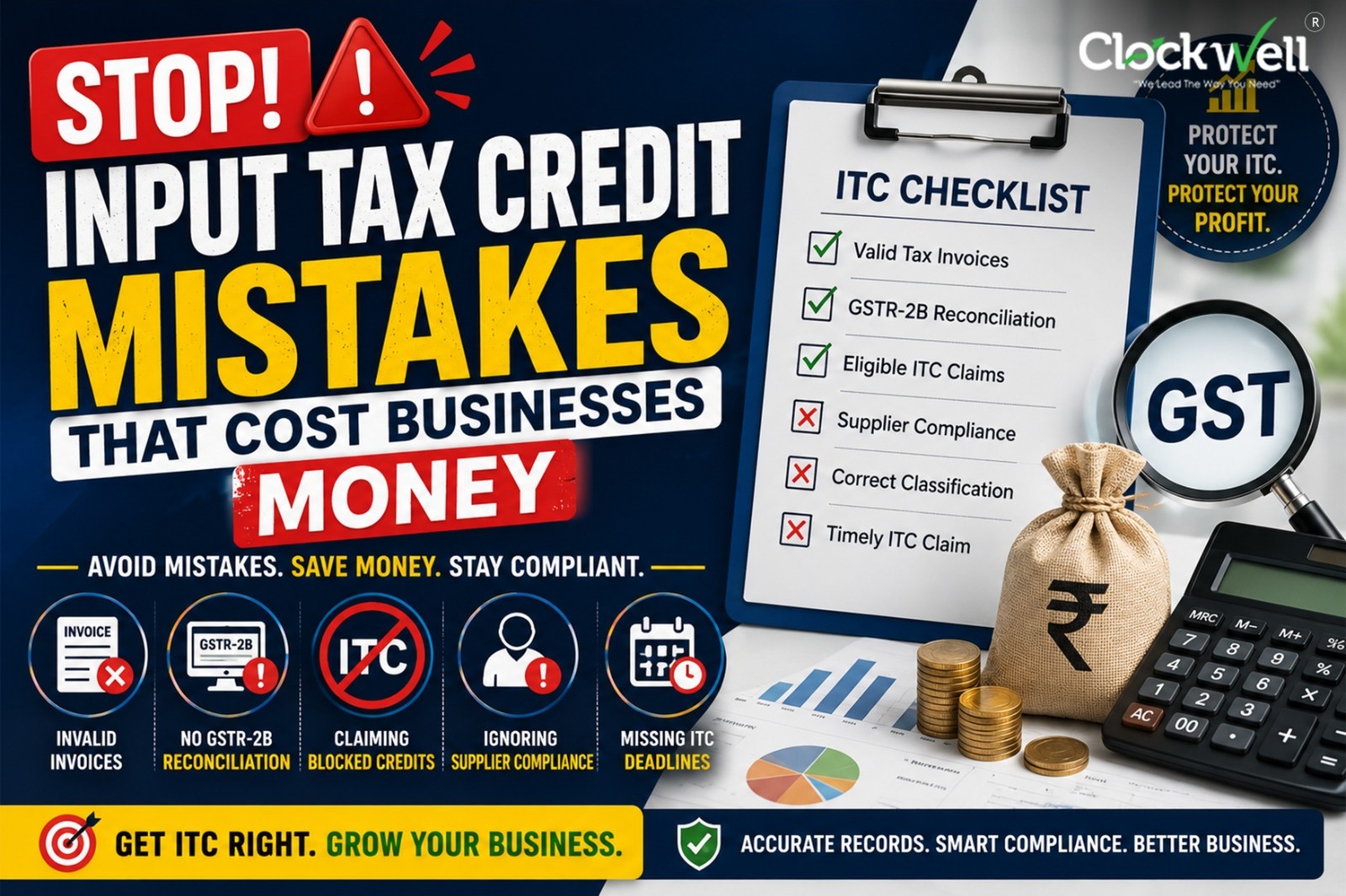
Input Tax Credit (ITC) is one of the biggest benefits available under the GST system. It helps businesses reduce their tax burden by claiming credit for GST paid on purchases and business expenses.
However, many businesses lose money due to avoidable ITC mistakes. Incorrect claims, poor record management, and lack of reconciliation can lead to ITC reversals, penalties, notices, and cash flow issues.
Understanding these common mistakes can help businesses protect their GST credits and remain compliant.
What is Input Tax Credit (ITC)?
Input Tax Credit allows businesses to reduce the GST paid on purchases from the GST collected on sales.
For example:
- GST Paid on Purchases = ₹10,000
- GST Collected on Sales = ₹20,000
GST Payable = ₹10,000
This mechanism prevents double taxation and reduces the overall tax burden.
Why ITC Compliance Matters
Proper ITC management helps businesses:
- Reduce GST liability
- Improve cash flow
- Avoid penalties
- Maintain compliance
- Improve profitability
Even a small ITC error can result in significant financial losses.
Mistake 1: Claiming ITC Without a Valid Tax Invoice
One of the most common mistakes is claiming ITC without proper documentation.
Businesses must have:
- Valid GST invoice
- Supplier GSTIN
- Correct invoice details
- Tax amount clearly mentioned
Without proper invoices, ITC claims may be disallowed.
Mistake 2: Not Reconciling GSTR-2B
Many businesses claim ITC without checking GSTR-2B.
This can create mismatches between:
- Purchase records
- Supplier filings
- GST returns
Regular reconciliation helps identify discrepancies before they become compliance issues.
Mistake 3: Claiming Blocked Credits
Not all GST paid is eligible for ITC.
Common blocked credits include:
- Personal expenses
- Food and beverages
- Club memberships
- Employee personal benefits
- Certain motor vehicle expenses
Claiming blocked credits can lead to ITC reversal and penalties.
Mistake 4: Ignoring Supplier Compliance
Your ITC eligibility depends on supplier compliance.
If the supplier:
- Does not file GST returns
- Fails to pay GST
- Reports incorrect invoices
Your ITC claim may be affected.
Always work with compliant vendors.
Mistake 5: Claiming ITC on Personal Expenses
Only business-related expenses qualify for ITC.
Mixing personal and business expenses is a common mistake that can attract GST scrutiny.
Maintain separate records for business transactions.
Mistake 6: Missing ITC Claim Deadlines
GST law provides specific timelines for claiming ITC.
Delaying claims may result in permanent loss of credit.
Businesses should review purchase records regularly to avoid missing deadlines.
Mistake 7: Incorrect GSTIN Details
Incorrect GSTIN information can create:
- Invoice mismatches
- Reconciliation issues
- ITC denial
Always verify GST registration details before processing invoices.
Mistake 8: Poor Documentation
Businesses often fail to maintain:
- Invoices
- Payment records
- Purchase orders
- Vendor agreements
Poor documentation can create difficulties during GST audits and assessments.
Mistake 9: Failure to Reconcile Books of Accounts
Regular reconciliation should be done between:
- Books of accounts
- GSTR-1
- GSTR-3B
- GSTR-2B
Unreconciled records increase compliance risks.
Mistake 10: Depending Entirely on Manual Processes
Manual data entry increases the risk of:
- Duplicate claims
- Missing invoices
- Calculation errors
Using accounting software improves accuracy and efficiency.
Financial Impact of ITC Mistakes
Incorrect ITC claims can result in:
- ITC reversal
- Interest liability
- GST penalties
- Cash flow problems
- GST notices
These issues directly affect business profitability.
Best Practices for ITC Management
Maintain Proper Records
Keep all invoices and GST documents organized.
Reconcile Monthly
Match purchase records with GSTR-2B regularly.
Verify Suppliers
Work only with GST-compliant vendors.
Review ITC Eligibility
Check whether expenses qualify before claiming credit.
Seek Professional Guidance
Expert support helps reduce compliance risks.
How Clockwell Can Help
Clockwell provides:
- GST filing services
- ITC reconciliation support
- GST compliance reviews
- Accounting and bookkeeping
- GST advisory services
Our experts help businesses maximize eligible ITC while staying fully compliant.
Input Tax Credit is a valuable benefit under GST, but incorrect claims can become expensive. Businesses that maintain proper records, reconcile regularly, and follow GST rules can avoid costly mistakes and improve profitability.
A proactive approach to ITC management helps businesses stay compliant, reduce tax liability, and protect their financial health.
Published on June 18, 2026