
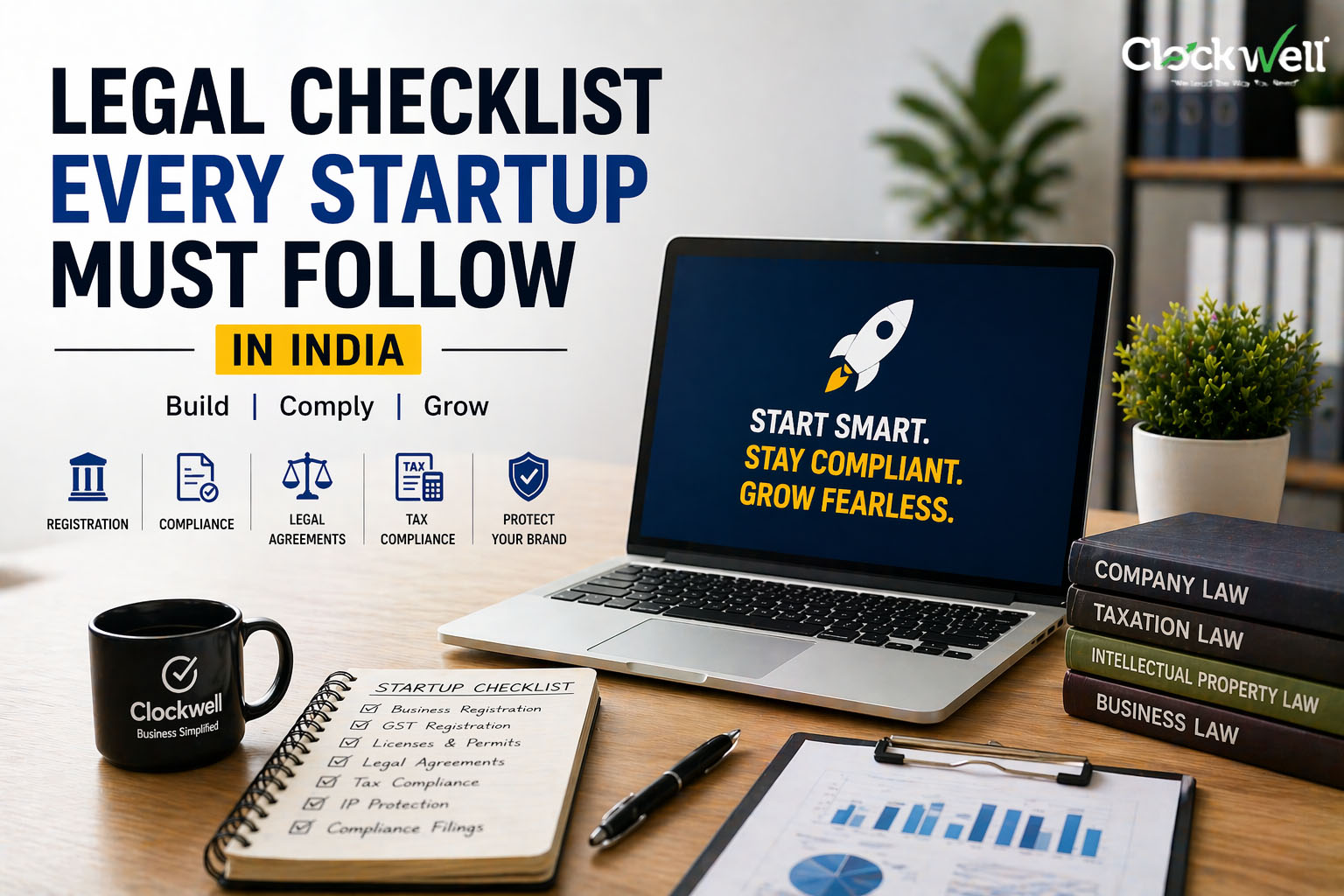
Starting a business is exciting, but ignoring legal requirements can lead to serious problems later. Many startups focus only on growth and marketing, but compliance is equally important. Following a proper legal checklist for startups in India ensures your business runs smoothly without penalties or legal risks.
This guide covers all the essential legal steps every startup must complete.
Why Legal Compliance is Important for Startups
Legal compliance is not just about following rules. It helps:
- Avoid penalties and legal notices
- Build trust with customers and investors
- Ensure smooth business operations
- Support long-term growth
Ignoring compliance in the early stages can create costly problems later.
1. Choose the Right Business Structure
The first step in the legal checklist for startups in India is selecting the right business structure.
Common options include:
- Sole Proprietorship
- Partnership Firm
- Limited Liability Partnership (LLP)
- Private Limited Company
Each structure has different legal requirements, tax implications, and scalability options. Choosing the right one is crucial.
2. Company Registration
Once you select your structure, you must register your business legally.
This includes:
- Name approval
- Incorporation process
- PAN and TAN registration
A properly registered company gives your business legal identity.
3. GST Registration
GST registration is mandatory in many cases.
You need GST if:
- Your turnover crosses the threshold
- You sell online (e-commerce)
- You provide interstate services
GST compliance is a key part of the legal checklist for startups in India.
4. Open a Business Bank Account
A separate business bank account is essential for:
- Financial transparency
- Proper accounting
- Legal compliance
It also helps in building credibility.
5. Obtain Required Licenses
Depending on your business type, you may need specific licenses:
- Shop and Establishment License
- FSSAI License (for food business)
- Import Export Code (IEC)
- Professional Tax Registration
These licenses ensure your business operates legally.
6. Draft Legal Agreements
Legal agreements protect your business from disputes.
Important agreements include:
- Founder agreement
- Partnership agreement
- Employee contracts
- Vendor agreements
Having clear agreements avoids misunderstandings.
7. Trademark Registration
Protecting your brand is important.
Trademark registration helps:
- Secure your brand name and logo
- Prevent misuse by competitors
- Build brand value
It is a crucial step for long-term growth.
8. Maintain Proper Accounting
Every startup must maintain proper financial records.
This includes:
- Income and expenses
- Invoices
- Tax records
Accurate accounting helps in compliance and decision-making.
9. File Regular Returns
Startups must file various returns on time:
- GST returns
- Income tax returns
- ROC filings (for companies)
Missing deadlines can result in penalties.
10. Data Protection Compliance
If your business collects customer data, you must ensure:
- Privacy policy
- Secure data handling
- Terms and conditions
This builds customer trust and avoids legal issues.
Common Mistakes Startups Make
Many startups ignore compliance due to lack of awareness. Common mistakes include:
- Not registering GST
- Ignoring legal agreements
- Missing return filing deadlines
- Mixing personal and business finances
Avoiding these mistakes ensures smooth operations.
Benefits of Following Legal Checklist
Following a proper legal checklist for startups in India offers several advantages:
- Reduces legal risks
- Improves business credibility
- Helps in funding and investment
- Supports long-term growth
Compliance is a foundation for success.
How Clockwell Can Help
Handling legal requirements can be overwhelming for startups. Professional support ensures everything is done correctly.
Clockwell provides:
- Company registration services
- GST registration and filing
- Legal documentation support
- Compliance management
- Ongoing advisory
With expert help, startups can focus on growth while staying compliant.
Following a legal checklist for startups in India is essential for building a strong and sustainable business. From registration to tax filing and data protection, every step plays a critical role.
By completing all legal requirements correctly, startups can avoid risks and create a solid foundation for future success.
Starting right ensures you grow without interruptions.
Published on April 24, 2026