
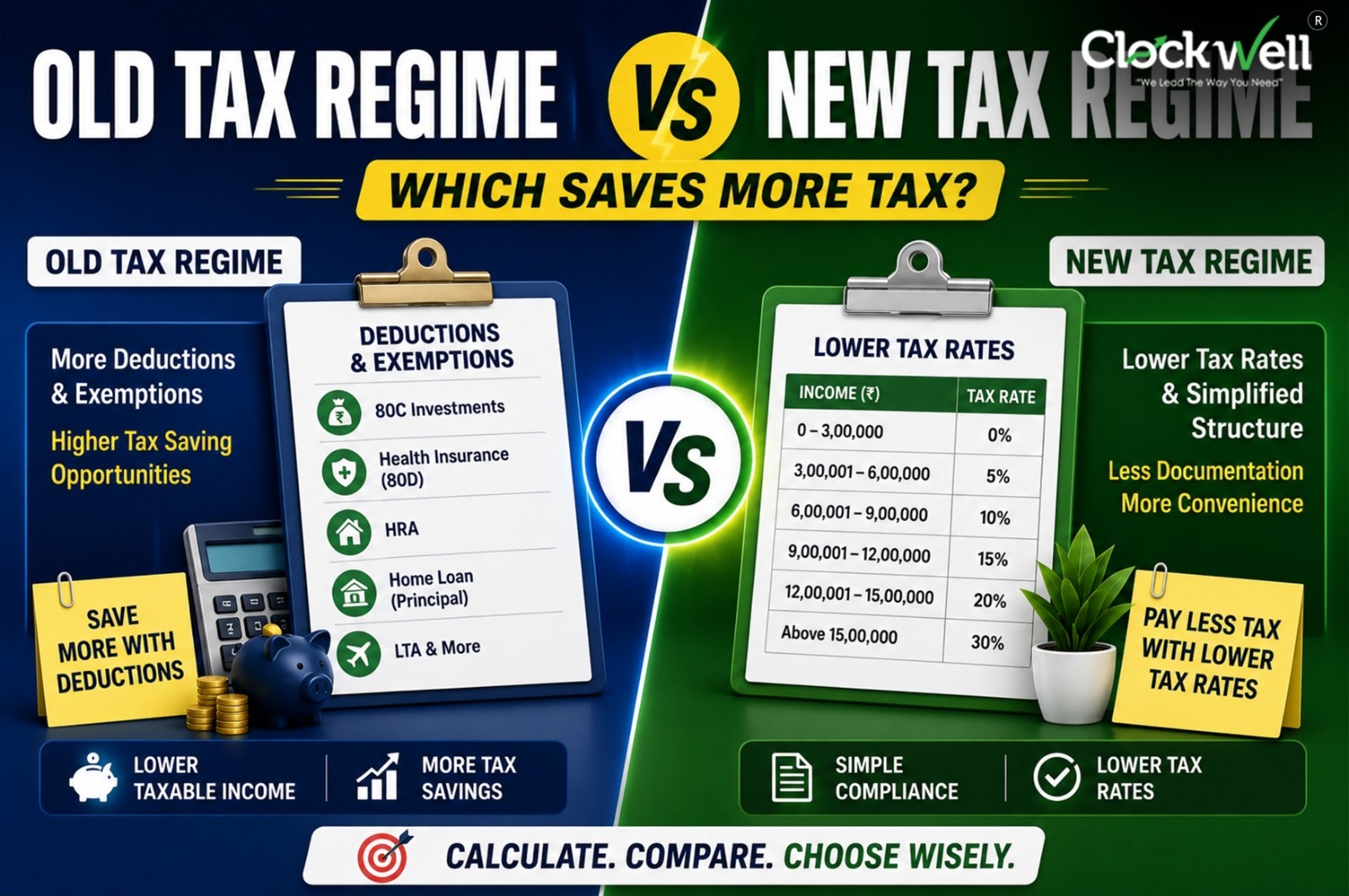
Choosing between the Old Tax Regime and the New Tax Regime is one of the most important decisions taxpayers make while filing their Income Tax Return (ITR). Selecting the right regime can significantly impact your tax liability and overall savings.
While the Old Tax Regime offers multiple deductions and exemptions, the New Tax Regime provides lower tax rates with simplified compliance. Understanding the differences can help you make an informed decision.
This guide explains the old tax regime vs new tax regime and helps you determine which option may be better for your financial situation.
What is the Old Tax Regime?
The Old Tax Regime allows taxpayers to claim various deductions and exemptions to reduce taxable income.
Common Deductions Available:
- Section 80C investments
- Employee Provident Fund (EPF)
- Public Provident Fund (PPF)
- Life Insurance Premium
- ELSS Mutual Funds
- Home Loan Principal Repayment
- Health Insurance (80D)
- House Rent Allowance (HRA)
- Leave Travel Allowance (LTA)
The more eligible deductions you claim, the lower your taxable income becomes.
What is the New Tax Regime?
The New Tax Regime offers lower tax rates but removes most exemptions and deductions.
Key Features:
- Simplified tax structure
- Lower tax rates
- Fewer compliance requirements
- No need to invest solely for tax saving
This regime is designed for taxpayers who prefer simplicity over claiming multiple deductions.
Major Difference Between Old and New Tax Regime
| Particulars | Old Tax Regime | New Tax Regime |
|---|---|---|
| Tax Rates | Higher | Lower |
| Deductions | Available | Limited |
| Exemptions | Available | Limited |
| HRA Benefit | Yes | No |
| 80C Deduction | Yes | No |
| Compliance | More Documentation | Simpler |
| Suitable For | High Deduction Claimants | Low Deduction Claimants |
Who Should Choose the Old Tax Regime?
The Old Tax Regime may be beneficial if you:
- Claim significant deductions under Section 80C
- Pay health insurance premiums
- Have a home loan
- Receive HRA benefits
- Invest regularly in tax-saving instruments
The more deductions you claim, the more attractive the old regime becomes.
Who Should Choose the New Tax Regime?
The New Tax Regime may be suitable if you:
- Have limited deductions
- Do not invest heavily for tax savings
- Prefer a simpler filing process
- Want lower tax rates without documentation requirements
Young professionals and first-time taxpayers often find the new regime beneficial.
Factors to Consider Before Choosing
Total Annual Income
Your income level affects tax savings under both regimes.
Available Deductions
Calculate all eligible deductions before deciding.
Housing Situation
HRA and home loan benefits can influence the outcome.
Investment Plans
If you already invest for long-term goals, the old regime may provide additional tax benefits.
Common Mistakes Taxpayers Make
Choosing Without Calculation
Never select a regime without comparing tax liability.
Ignoring Eligible Deductions
Many taxpayers forget to include all eligible deductions.
Investing Only for Tax Saving
Investments should align with financial goals, not just tax benefits.
Assuming One Regime Is Always Better
The best option varies from person to person.
How to Decide Which Regime Saves More Tax
Before filing your return:
✔ Calculate total income
✔ List all deductions and exemptions
✔ Compare tax liability under both regimes
✔ Choose the option with lower tax payable
A proper comparison can help maximize savings.
Benefits of Professional Tax Planning
Professional tax advisors can help:
- Evaluate both tax regimes
- Identify eligible deductions
- Optimize tax savings legally
- Improve tax planning strategies
Expert guidance often results in better financial outcomes.
How Clockwell Can Help
Clockwell provides:
- Income tax filing services
- Tax regime comparison
- Tax planning and advisory
- Accounting and bookkeeping
- Compliance support
Our experts help individuals and businesses choose the most tax-efficient option based on their financial situation.
When comparing the Old Tax Regime vs New Tax Regime, there is no universal answer. The best choice depends on your income, deductions, investments, and financial goals.
Taxpayers with substantial deductions may benefit from the Old Tax Regime, while those seeking simplicity and lower rates may prefer the New Tax Regime.
Calculating both options before filing your return is the best way to maximize tax savings.
Published on June 15, 2026