
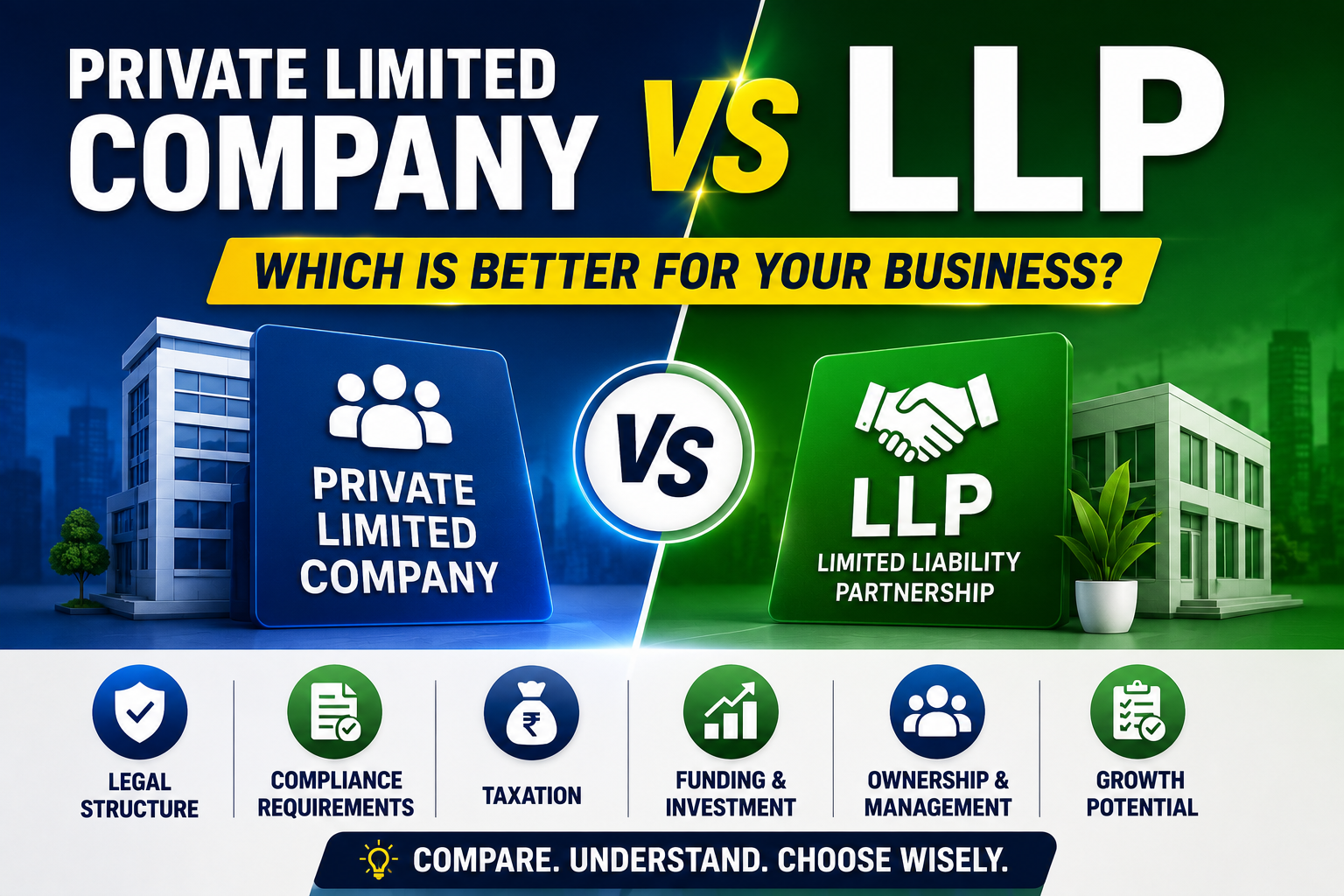
Choosing the right business structure is one of the most important decisions for entrepreneurs. Among the most popular options in India are the Private Limited Company (Pvt Ltd) and the Limited Liability Partnership (LLP).
Both structures offer limited liability protection and legal recognition, but they differ significantly in terms of ownership, compliance requirements, taxation, fundraising opportunities, and scalability.
Understanding the differences between a Private Limited Company and an LLP can help you select the structure that best supports your business goals.
What is a Private Limited Company?
A Private Limited Company is a separate legal entity registered under the Companies Act.
It is owned by shareholders and managed by directors.
Key Features:
- Separate legal identity
- Limited liability protection
- Easy ownership transfer
- Better fundraising opportunities
- Higher compliance requirements
Private Limited Companies are often preferred by startups and businesses planning rapid growth.
What is an LLP?
A Limited Liability Partnership (LLP) combines the benefits of a partnership firm and a company.
Partners manage the business while enjoying limited liability protection.
Key Features:
- Separate legal entity
- Limited liability for partners
- Lower compliance burden
- Flexible management structure
- Suitable for professional firms and small businesses
LLPs are popular among consultants, service providers, and family-run businesses.
Private Limited Company vs LLP: Key Differences
| Particulars | Private Limited Company | LLP |
|---|---|---|
| Governing Law | Companies Act | LLP Act |
| Owners | Shareholders | Partners |
| Management | Directors | Designated Partners |
| Compliance | Higher | Lower |
| Fundraising | Easier | Limited |
| Ownership Transfer | Easy | More Complex |
| Investor Preference | High | Moderate |
| Annual Filings | More Extensive | Comparatively Less |
Liability Protection
Both structures offer limited liability protection.
Private Limited Company
Shareholders are liable only up to their shareholding amount.
LLP
Partners are liable only to the extent of their agreed contribution.
This protects personal assets from business liabilities.
Compliance Requirements
Private Limited Company
Requires:
- Board meetings
- Annual filings
- Statutory compliance
- Financial statements
Compliance is more structured and regulated.
LLP
Requires:
- Annual return filing
- Statement of accounts
- Basic regulatory compliance
LLPs generally have fewer compliance obligations.
Taxation Differences
Tax treatment is an important consideration.
Private Limited Company
Subject to corporate tax provisions.
LLP
Taxed as a partnership entity under income tax laws.
Tax implications vary based on business size, profitability, and future plans.
Professional tax planning is recommended before making a decision.
Fundraising and Investment
Private Limited Company
Advantages:
- Can issue shares
- Easier to attract investors
- Preferred by venture capitalists and angel investors
Ideal for startups seeking external funding.
LLP
Limitations:
- Cannot issue shares
- Less attractive to institutional investors
Suitable for businesses not planning to raise significant capital.
Ownership Transfer
Private Limited Company
Ownership can be transferred through share transfer.
This makes expansion and succession planning easier.
LLP
Ownership transfer requires changes in partnership agreements and partner structure.
The process is relatively less flexible.
Best Option for Startups
Private Limited Companies are generally preferred by startups because:
- Better investor confidence
- Easier fundraising
- Strong corporate image
- Scalability advantages
Many successful startups begin as Private Limited Companies.
Best Option for Small Businesses
LLPs are often ideal for:
- Consultants
- Professionals
- Small service businesses
- Family-owned businesses
The lower compliance burden makes LLPs attractive for smaller operations.
Factors to Consider Before Choosing
Choose a Private Limited Company If:
- You plan to raise investment
- You expect rapid growth
- You want better market credibility
- You may issue shares in future
Choose an LLP If:
- You want lower compliance
- You operate a small business
- You do not require external funding
- You prefer management flexibility
Common Mistakes Entrepreneurs Make
- Choosing structure based only on registration cost
- Ignoring future funding needs
- Overlooking compliance requirements
- Not considering long-term growth plans
Selecting the wrong structure can create challenges later.
How Clockwell Can Help
Clockwell provides:
- Private Limited Company registration
- LLP registration services
- Startup advisory
- Compliance management
- Accounting and taxation support
- Business structuring consultation
Our experts help entrepreneurs choose the right business structure based on their goals and growth plans.
When comparing Private Limited Company vs LLP, there is no one-size-fits-all answer. The right choice depends on your business objectives, growth plans, compliance preferences, and funding requirements.
For startups and growth-focused businesses, a Private Limited Company often provides greater opportunities. For professionals and small businesses seeking flexibility and lower compliance, an LLP can be an excellent choice.
Choosing the right structure from the beginning can save time, money, and future complications.
Published on June 11, 2026