

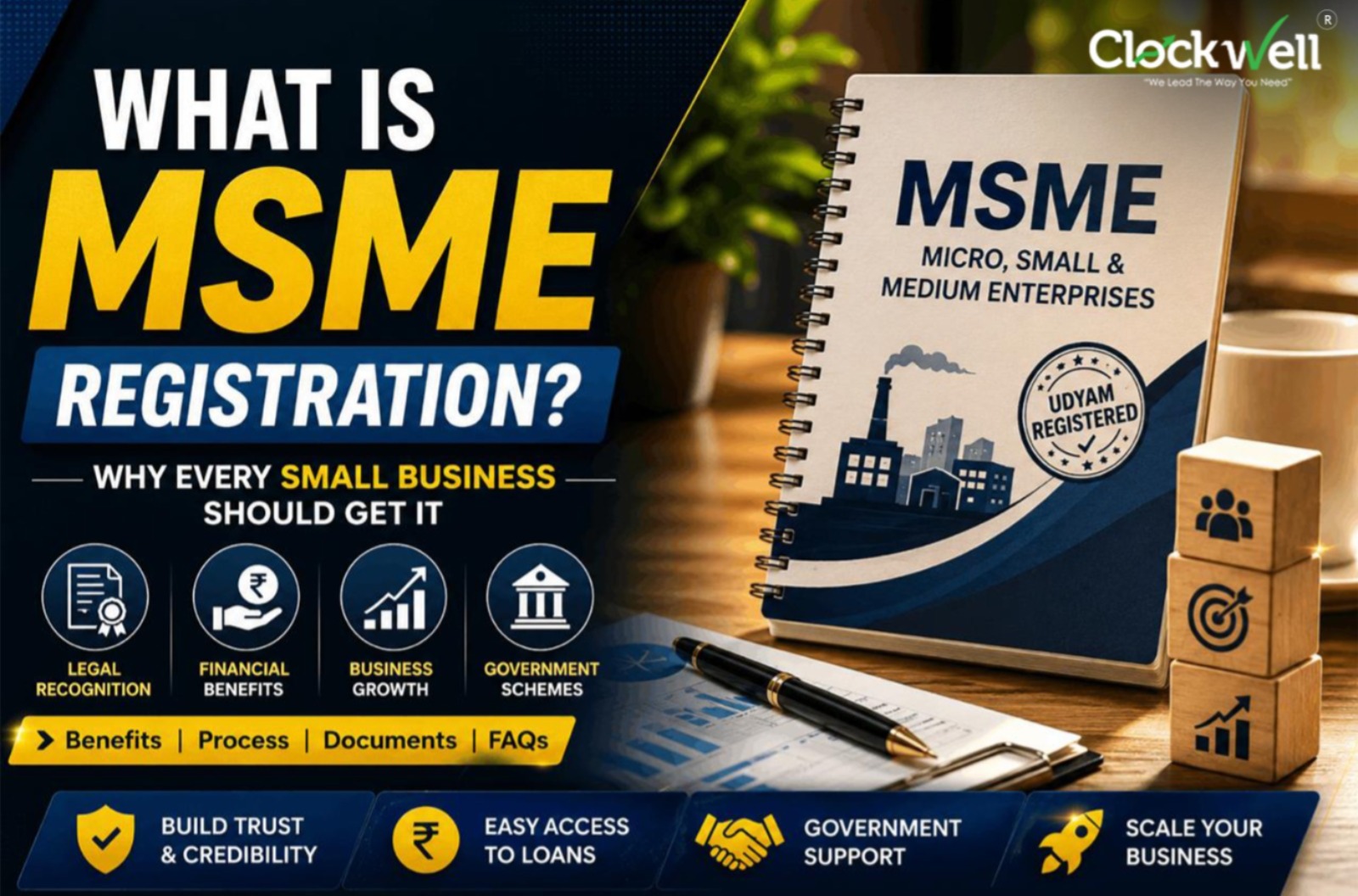
Starting a business is exciting, but building a successful business requires more than just great products or services. Every entrepreneur dreams of expanding operations, attracting customers, improving profits, and gaining financial stability. However, many small businesses miss out on valuable government benefits simply because they are not registered as an MSME.
Whether you own a restaurant, retail store, furniture manufacturing unit, digital agency, construction company, consultancy, clothing brand, food processing business, or service company, MSME Registration can unlock numerous financial and operational advantages that help your business grow faster.
Despite its importance, many entrepreneurs believe that MSME Registration is only for manufacturing industries. In reality, almost every eligible small business in India can benefit from obtaining an MSME certificate through the Government's Udyam Registration portal.
Over the years, we've worked with several MSME clients across different industries—from food businesses and furniture manufacturers to service providers and trading companies. A common observation is that businesses with proper MSME Registration often have better access to funding, government incentives, tender opportunities, and easier credit facilities compared to unregistered businesses.
The Government of India has introduced various initiatives to strengthen Micro, Small, and Medium Enterprises because this sector contributes significantly to employment generation, exports, innovation, and the country's economic growth. By obtaining MSME Registration, entrepreneurs can take advantage of schemes designed specifically to support business expansion and financial stability.
In this comprehensive guide, you'll learn everything about MSME Registration, including its meaning, importance, eligibility, and why every small business should seriously consider registering under the Udyam Registration system.
MSME Registration is the official recognition provided by the Government of India to businesses classified as Micro, Small, or Medium Enterprises (MSMEs) under the Ministry of Micro, Small and Medium Enterprises.
Today, MSME Registration is completed through the Udyam Registration Portal, making the process completely online, paperless, and based on self-declaration.
Once your business is successfully registered, you receive a unique Udyam Registration Number (URN) along with an official Udyam Registration Certificate, which serves as proof that your business is recognized as an MSME.
Unlike many business registrations that involve lengthy paperwork and multiple approvals, MSME Registration is designed to be simple, fast, and accessible for eligible entrepreneurs.
MSME stands for:
Micro Enterprises
Small Enterprises
Medium Enterprises
Businesses are classified based on:
Investment in plant and machinery or equipment
Annual turnover
These revised criteria allow more businesses to qualify as MSMEs, enabling them to benefit from government support programs.
Micro Enterprise Up to ₹2.5 Crore Up to ₹10 Crore
Small Enterprise Up to ₹25 Crore Up to ₹100 Crore
Medium Enterprise Up to ₹125 Crore Up to ₹500 Crore
Note: Businesses must satisfy the applicable investment and turnover criteria under the latest government guidelines. These limits may be revised by the Government from time to time.
What is Udyam Registration?
Many business owners wonder whether MSME Registration and Udyam Registration are different.
The answer is simple:
They are essentially the same.
Earlier, businesses registered under the Udyog Aadhaar Memorandum (UAM). The Government later replaced this system with the Udyam Registration Portal, which is now the official platform for MSME Registration.
When people say:
MSME Certificate
MSME Registration
Udyam Registration
Udyam Certificate
they are generally referring to the same government-recognized registration.
Why Was Udyam Registration Introduced?
The Government introduced the Udyam Registration system to simplify the registration process and improve transparency.
Its primary objectives include:
Promoting entrepreneurship
Supporting small businesses
Improving access to finance
Increasing employment opportunities
Encouraging innovation
Strengthening India's economy
Making government benefits more accessible
The online system also integrates with government databases, reducing paperwork and speeding up verification.
Real-Life Example
Imagine two furniture manufacturers operating in the same city.
Business A
Registered as an MSME
Eligible for government schemes
Easier bank loan approvals
Lower interest rates under certain schemes
Better opportunities in government tenders
Business B
Not registered
Limited access to MSME-specific benefits
Misses subsidy opportunities
Faces greater challenges in obtaining financial assistance
Although both businesses offer similar products, the registered enterprise enjoys significant long-term advantages.
The same principle applies to restaurants, IT companies, digital marketing agencies, textile businesses, construction firms, consultancy services, wholesalers, retailers, food manufacturers, and many other sectors.
Many entrepreneurs assume MSME Registration is merely another compliance requirement. In reality, it is a strategic business decision that can positively influence financing, credibility, and long-term growth.
Here are some of the key reasons why MSME Registration matters.
1. Builds Business Credibility
An MSME certificate demonstrates that your business is officially recognized by the Government of India. This recognition enhances trust among banks, financial institutions, customers, suppliers, and potential investors.
Businesses with government recognition often appear more reliable during negotiations and partnerships.
2. Easier Access to Finance
One of the biggest challenges faced by small businesses is obtaining affordable funding.
Registered MSMEs often have better access to:
Business loans
Working capital finance
Equipment financing
Government-backed credit schemes
Collateral-free loan opportunities under eligible schemes
This improves cash flow and supports business expansion.
3. Access to Government Schemes
The Government regularly introduces schemes aimed specifically at MSMEs.
These may include:
Financial assistance
Technology upgrades
Skill development programs
Export promotion initiatives
Credit guarantee schemes
Business development support
Without MSME Registration, businesses may not qualify for many of these benefits.
4. Improved Market Opportunities
Many government departments, public sector undertakings, and large organizations encourage procurement from MSMEs.
Registration can therefore improve opportunities to participate in government tenders and institutional procurement.
5. Better Financial Stability
Small businesses frequently experience fluctuations in cash flow.
MSME-related support mechanisms, easier financing options, and government initiatives help businesses become more resilient during economic challenges.
6. Encourages Business Growth
Registered businesses often find it easier to:
Expand operations
Purchase machinery
Hire employees
Enter new markets
Improve production capacity
These factors contribute to sustainable long-term growth.
7. Supports India's Economy
MSMEs are widely regarded as the backbone of the Indian economy.
They contribute significantly to:
Employment generation
Manufacturing output
Service sector growth
Rural development
Exports
Innovation
By registering as an MSME, businesses become part of this vital economic ecosystem.
Who Needs MSME Registration?
A common misconception is that MSME Registration is only relevant for factories or manufacturing units.
In reality, both manufacturing and service-based businesses can register, provided they meet the eligibility criteria.
Manufacturing Businesses
Examples include:
Furniture manufacturers
Food processing units
Textile manufacturers
Plastic product manufacturers
Engineering workshops
Packaging manufacturers
Electrical equipment manufacturers
Automobile component manufacturers
Service Businesses
Eligible service providers include:
Chartered Accountants
Business consultants
Digital marketing agencies
Software companies
IT service providers
Advertising agencies
Architects
Interior designers
Event management firms
Educational institutions
Logistics companies
Repair service providers
Trading Businesses
Depending on the prevailing government framework and applicable eligibility, several wholesale and retail businesses may also benefit from MSME recognition and related schemes.
Examples include:
Wholesale distributors
Retail shops
Electronics stores
Hardware businesses
Medical equipment dealers
Startups
New startups can greatly benefit from MSME Registration because it:
Improves business credibility
Facilitates fundraising discussions
Enhances loan eligibility
Opens access to startup support initiatives
Registering early helps establish a strong compliance foundation.
Home-Based Businesses
Many home entrepreneurs overlook MSME Registration.
Businesses such as:
Homemade food brands
Online sellers
Handmade product businesses
Freelancers with registered enterprises
Boutique owners
Bakery businesses
Digital creators operating as businesses
may also qualify, depending on their business structure and eligibility.
When Should You Consider MSME Registration?
Timing plays an important role in maximizing the benefits of MSME Registration.
Here are the ideal stages to register.
1. Immediately After Starting Your Business
Once your business is established and has the necessary registrations (such as PAN and GST, where applicable), it's wise to complete MSME Registration as early as possible.
Early registration ensures that you can access benefits from the beginning of your business journey.
2. Before Applying for Business Loans
Planning to approach a bank or financial institution?
Obtaining MSME Registration beforehand may strengthen your loan application and improve access to MSME-focused financial products.
3. Before Expanding Operations
If you're planning to:
Open a new branch
Purchase machinery
Hire more employees
Increase production
Launch new products
MSME Registration can help you leverage available government support during your expansion phase.
4. Before Participating in Government Tenders
Many government procurement opportunities include provisions or benefits for eligible MSMEs.
Registering in advance ensures you're prepared to participate when suitable opportunities arise.
5. Before Seeking Investors or Partnerships
Investors and business partners often assess a company's compliance and legal standing.
An MSME certificate adds credibility and demonstrates that your business has taken important formalization steps.
Key Features of MSME Registration
One of the biggest reasons behind the growing popularity of MSME Registration is its simplicity and the wide range of benefits it offers. Unlike many regulatory registrations that involve lengthy paperwork and multiple approvals, the Udyam Registration system is designed to be straightforward, transparent, and business-friendly.
Below are the key features every entrepreneur should know.
1. Completely Online Registration
The entire MSME Registration process is conducted online through the Government's Udyam Registration Portal.
Business owners do not need to visit government offices or submit physical documents in most cases. The online process saves time, reduces paperwork, and makes registration accessible from anywhere in India.
2. Government Recognition
Once your application is approved, your business receives official recognition as a Micro, Small, or Medium Enterprise (MSME).
This recognition strengthens your business profile when dealing with:
Banks
Financial institutions
Government departments
Suppliers
Corporate clients
Investors
Having an MSME certificate demonstrates that your business is formally recognized under the Ministry of MSME.
3. Unique Udyam Registration Number (URN)
Every registered business is assigned a Unique Udyam Registration Number (URN).
This unique identification number helps government departments verify your registration and enables you to access various MSME-related schemes and benefits.
4. Lifetime Validity
Unlike some licenses that require periodic renewal, MSME Registration generally does not have an expiry date, provided your business continues to comply with applicable government regulations and updates its information whenever required.
This makes it a one-time registration with long-term value.
5. Paperless Process
The Udyam Registration system is largely paperless and relies on self-declaration, supported by integration with government databases such as PAN and GST (where applicable).
This minimizes documentation and speeds up verification.
6. Easy Business Classification
The registration system automatically classifies businesses as:
Micro Enterprise
Small Enterprise
Medium Enterprise
The classification is based on investment and annual turnover, ensuring a standardized and transparent process.
7. Access to Government Schemes
Registered MSMEs become eligible for numerous government initiatives, including support related to:
Credit assistance
Skill development
Technology upgradation
Market promotion
Export development
Quality certification
Business growth
These schemes are introduced and updated periodically by the Government to support the MSME sector.
8. Suitable for Manufacturing and Service Businesses
Many entrepreneurs mistakenly believe MSME Registration is only for manufacturers.
In reality, businesses from diverse industries can register, including:
IT companies
Digital marketing agencies
Restaurants
Furniture manufacturers
Traders
Consultants
Healthcare providers
Educational institutions
Construction companies
Logistics firms
Step-by-Step MSME Registration Process
Understanding the registration process helps business owners complete the application smoothly and avoid unnecessary delays.
Here's a step-by-step overview.
Step 1: Check Your Eligibility
Before applying, confirm that your business qualifies as a Micro, Small, or Medium Enterprise based on the latest investment and turnover criteria.
You should also ensure that your business has the necessary registrations and identification details, such as:
PAN
Aadhaar
GST Registration (where applicable)
Checking eligibility beforehand reduces the chances of application errors.
Step 2: Gather Required Information
Before starting the application, keep all essential business information ready.
This typically includes:
Business name
Business address
Type of organization
Aadhaar details
PAN details
Bank account information
Business activity
Investment details
Annual turnover
Contact information
Preparing these details in advance makes the registration process quicker and more efficient.
Step 3: Submit the Online Application
Visit the official Udyam Registration Portal and complete the online application.
During this stage, you'll provide:
Personal details
Business information
Investment information
Business activity details
Banking information
Ensure all details are accurate before submission, as incorrect information may lead to delays or the need for corrections later.
Step 4: Verification Process
After submission, the information provided is verified through integrated government systems.
Depending on the application, the portal may validate information linked to:
Aadhaar
PAN
GST
Income Tax records
If all information matches successfully, the registration process moves forward smoothly.
Step 5: Receive the Udyam Registration Certificate
Once verification is complete, the business receives its Udyam Registration Certificate.
The certificate contains important details such as:
Udyam Registration Number
Enterprise Name
Business Classification
Date of Registration
Type of Enterprise
The certificate serves as official proof of MSME Registration and can be used while applying for government schemes, business loans, tenders, and other business-related opportunities.
Documents Required for MSME Registration
Although the registration process is relatively simple, keeping the correct documents ready can help ensure a smooth application.
Below are the commonly required documents and why they matter.
1. Aadhaar Card
Why it's required:
The Aadhaar number is used to verify the identity of the business owner or authorized signatory.
For proprietorships, the proprietor's Aadhaar is generally used.
2. PAN Card
Why it's required:
The PAN helps verify the business's tax identity and is linked with Income Tax records.
It also assists in determining investment and turnover information.
3. GST Registration Details (Where Applicable)
Why it's required:
GST details help verify turnover and business activity for eligible enterprises.
Businesses that are required to obtain GST registration under applicable laws should provide the relevant information.
4. Business Address Details
Why it's required:
The registered business address helps identify the location of operations and is reflected in official records.
5. Bank Account Details
Why it's required:
Bank account information helps establish business identity and may be relevant while applying for government incentives or financial schemes.
6. Business Activity Information
You'll need to specify whether your business is engaged in:
Manufacturing
Services
Both
This classification helps determine applicable benefits and reporting requirements.
7. Investment Details
The government classifies MSMEs based partly on investment in plant, machinery, or equipment.
Providing accurate information is therefore essential.
8. Annual Turnover Information
Annual turnover is another important criterion used for enterprise classification.
Accurate reporting helps ensure the correct MSME category.
Top Benefits of MSME Registration
The real value of MSME Registration lies in the advantages it offers throughout a business's growth journey.
Below are some of the most significant benefits.
1. Easier Access to Business Loans
Banks and financial institutions often have dedicated loan products for MSMEs.
Registered businesses may benefit from:
Faster processing
Better financing options
Access to government-supported credit schemes
Improved loan eligibility
2. Better Access to Government Schemes
The Government regularly launches programs designed specifically for MSMEs.
These may include support related to:
Technology upgrades
Marketing assistance
Skill development
Export promotion
Business modernization
Being registered improves your ability to take advantage of these initiatives.
3. Enhanced Business Credibility
Customers, vendors, banks, and corporate clients generally have greater confidence in businesses that possess official government recognition.
An MSME certificate adds professionalism and trust to your business profile.
4. Improved Eligibility for Government Tenders
Many government procurement opportunities encourage participation from MSMEs.
Some tenders may also offer relaxations or special provisions for eligible MSME businesses, helping them compete more effectively.
5. Better Financial Stability
Access to financial support and government-backed schemes can strengthen working capital and help businesses manage operational expenses more effectively.
6. Increased Growth Opportunities
Registered businesses are often in a better position to:
Expand operations
Invest in new technology
Purchase machinery
Enter new markets
Scale production
These opportunities contribute to sustainable long-term growth.
7. Support During Business Challenges
During periods of economic uncertainty or industry-specific difficulties, governments often introduce relief measures aimed at supporting MSMEs.
Registered businesses are generally better positioned to benefit from such initiatives, subject to eligibility.
8. Encourages Digital Transformation
Several government programs promote the adoption of digital technologies among MSMEs.
Businesses can modernize operations by investing in:
Automation
Accounting software
Digital payments
E-commerce
ERP solutions
This improves efficiency and competitiveness.
9. Better Opportunities for Export Businesses
Businesses planning to enter international markets may benefit from export promotion initiatives, trade fairs, and support programs available to MSMEs.
This can help expand market reach and increase revenue potential.
10. Competitive Advantage
Many businesses in the same industry still operate without MSME Registration.
Registering your business can provide advantages in terms of financing, credibility, compliance, and access to growth opportunities, helping you stay ahead of competitors.
11. Improved Business Reputation
Whether you're negotiating with suppliers, approaching investors, or pitching to large corporate clients, having an MSME certificate reflects a commitment to formal business practices.
This often strengthens your overall business reputation.
12. Long-Term Strategic Value
MSME Registration is not just about immediate benefits.
It lays the foundation for:
Sustainable growth
Better compliance
Easier access to finance
Participation in government initiatives
Stronger market positioning
As your business evolves, the registration can continue to support your expansion plans.
Practical Business Examples
To understand the real-world value of MSME Registration, consider these examples:
Example 1: Restaurant Business
A growing restaurant chain plans to open additional outlets. With MSME Registration, the business becomes better positioned to explore eligible financing options, government support schemes, and technology upgradation initiatives that can assist with expansion.
Example 2: Furniture Manufacturer
A furniture manufacturing company invests in new machinery to increase production capacity. MSME recognition may improve access to credit facilities and government programs that encourage manufacturing growth and modernization.
Example 3: Digital Marketing Agency
A digital marketing agency expands its team and serves clients across multiple states. MSME Registration enhances the agency's professional credibility and can support participation in government projects or financing opportunities for business development.
Example 4: Food Processing Unit
A packaged food manufacturer aims to distribute products nationwide. With MSME Registration, the business can explore export promotion programs, quality certification support, and financial schemes designed to help small manufacturers grow.
Example 5: IT Services Company
An IT startup develops software solutions for enterprise clients. Registering as an MSME strengthens its compliance profile, improves credibility during client onboarding, and may provide access to government initiatives that encourage innovation and digital transformation.
Common Mistakes to Avoid During MSME Registration
Although MSME Registration is designed to be simple, many business owners make avoidable mistakes that can delay the registration process or cause issues later. Being aware of these common errors can save both time and effort.
1. Providing Incorrect Business Information
One of the most frequent mistakes is entering inaccurate business details, such as:
Wrong business name
Incorrect PAN or Aadhaar details
Incorrect business address
Invalid contact information
Even small errors can lead to verification issues. Always cross-check your details before submitting the application.
2. Selecting the Wrong Business Activity
Many applicants mistakenly classify their business as manufacturing instead of services, or vice versa.
For example:
A digital marketing agency is a service business.
A furniture factory is a manufacturing business.
Choosing the correct business activity ensures proper classification and helps avoid future complications.
3. Reporting Incorrect Investment or Turnover
Your enterprise category is determined based on investment and annual turnover.
Providing inaccurate figures can result in incorrect classification or compliance issues later. Use updated financial records when completing the application.
4. Not Updating Business Information
Businesses evolve over time. You may:
Change your address
Add new business activities
Increase turnover
Expand operations
Keeping your Udyam profile updated helps ensure that your records remain accurate and that you continue to receive applicable benefits.
5. Assuming MSME Registration Replaces Other Licenses
MSME Registration does not replace other statutory registrations that may be required for your business.
Depending on your business type, you may also need:
GST Registration
Company or LLP Registration
Trade License
FSSAI License
Professional Tax Registration
Shops & Establishments Registration
Import Export Code (IEC)
MSME Registration complements these registrations—it does not substitute them.
6. Ignoring Eligibility Requirements
Some businesses apply without verifying whether they meet the latest investment and turnover criteria.
Before registering, review the current government guidelines to ensure your enterprise qualifies.
7. Relying on Unofficial Websites
Many unofficial websites claim to provide "government registration" while charging unnecessary service fees.
Always use the official Udyam Registration Portal or consult a trusted business compliance professional if you need assistance.
Challenges Businesses Face—and How to Overcome Them
Despite the straightforward process, entrepreneurs may encounter practical challenges during MSME Registration. Here are some common issues and solutions.
Challenge 1: Lack of Awareness
Many business owners are unaware of the benefits of MSME Registration.
Solution
Stay informed through trusted government resources or consult experienced business advisors who can explain the long-term advantages.
Challenge 2: Confusion About Eligibility
Questions such as:
Is my business eligible?
Should I register as a Micro or Small Enterprise?
Does my service business qualify?
are very common.
Solution
Review the latest investment and turnover criteria and seek professional guidance if you're uncertain.
Challenge 3: Incorrect Documentation
Missing or inaccurate details can delay the registration process.
Solution
Keep essential information ready before applying, including:
Aadhaar
PAN
GST details (where applicable)
Business address
Bank account details
Turnover information
Challenge 4: Changing Government Guidelines
Policies, schemes, and eligibility criteria may be updated over time.
Solution
Regularly monitor official government notifications or work with consultants who stay updated on regulatory changes.
Challenge 5: Understanding Available Benefits
Some businesses obtain MSME Registration but never explore the schemes or incentives available to them.
Solution
After registration, periodically review government MSME schemes related to:
Finance
Technology
Export promotion
Skill development
Quality certification
Business modernization
Cost and Fees for MSME Registration
One of the biggest advantages of MSME Registration is that the registration process itself is designed to be affordable and accessible.
Government Registration Fee
The official Udyam Registration process is generally available without a government registration fee through the official portal.
However, business owners should always verify the latest government guidelines, as policies may change.
Professional Service Charges
Many entrepreneurs prefer to work with professional consultants because they:
Verify eligibility
Ensure accurate documentation
Minimize application errors
Assist with related registrations
Provide post-registration support
Professional consultancy fees vary depending on:
Business structure
Complexity of the application
Additional compliance services required
Documentation assistance
Advisory support
Additional Costs That May Apply
While MSME Registration itself may not involve a government fee, businesses may incur costs for related compliance activities such as:
Company incorporation
LLP registration
GST registration
Trademark registration
Accounting services
Annual compliance
Digital Signature Certificate (DSC), where applicable
These are separate from MSME Registration and depend on the specific needs of the business.
Latest MSME Updates and Trends (2026)
The MSME ecosystem continues to evolve as the Government of India strengthens support for small businesses. Here are some key trends and developments business owners should be aware of in 2026.
1. Continued Digital Transformation
Government services are becoming increasingly digital, making registration, compliance, and access to schemes more efficient.
Businesses that adopt digital tools and maintain updated records are better positioned to benefit from these initiatives.
2. Increased Focus on Credit Access
Financial institutions continue to introduce products and schemes aimed at improving credit availability for MSMEs.
Maintaining accurate financial records and timely compliance can enhance your eligibility for such opportunities.
3. Greater Support for Technology Adoption
MSMEs are increasingly encouraged to invest in:
Automation
Artificial Intelligence (AI)
Cloud-based software
Digital accounting systems
E-commerce platforms
Cybersecurity
These investments help businesses improve productivity and competitiveness.
4. Export Promotion Initiatives
The Government continues to encourage MSMEs to participate in global markets through export-related programs, trade fairs, and capacity-building initiatives.
Businesses planning international expansion should explore these opportunities.
5. Sustainability and Green Business Practices
There is growing emphasis on sustainable manufacturing, energy efficiency, and environmentally responsible business operations.
MSMEs adopting green practices may find additional support through government and industry initiatives.
Frequently Asked Questions (FAQs)
1. What is MSME Registration?
MSME Registration, also known as Udyam Registration, is the official recognition provided by the Government of India to eligible Micro, Small, and Medium Enterprises.
2. Is MSME Registration mandatory?
No. MSME Registration is generally voluntary. However, obtaining it can provide access to a range of government schemes, financial support, and business opportunities.
3. Who can apply for MSME Registration?
Eligible manufacturing and service enterprises, including proprietorships, partnerships, LLPs, companies, cooperative societies, and other eligible entities, can apply.
4. Can startups apply for MSME Registration?
Yes. Eligible startups can register as MSMEs and benefit from various government initiatives designed to support early-stage businesses.
5. Is MSME Registration only for manufacturing businesses?
No. Service-based businesses such as IT companies, consultants, digital agencies, healthcare providers, educational institutions, and many others can also register if they meet the eligibility criteria.
6. How long does MSME Registration remain valid?
MSME Registration generally remains valid without periodic renewal, provided the business complies with applicable regulations and updates its information whenever required.
7. Can I update my MSME Registration later?
Yes. If there are changes to your business details, such as address, turnover, or business activity, you should update your Udyam registration accordingly.
8. Does MSME Registration guarantee a business loan?
No. MSME Registration does not guarantee loan approval. However, it can improve access to MSME-focused financial products and government-supported credit schemes, subject to the lender's eligibility criteria.
9. Can a business have both GST Registration and MSME Registration?
Yes. These registrations serve different purposes and often complement each other.
10. Should I consult a professional for MSME Registration?
While many businesses complete the process independently, professional guidance can help ensure accurate documentation, avoid common mistakes, and streamline the registration process—especially when combined with other business compliance requirements.
Expert Tips for Business Owners
If you're planning to register your business as an MSME, keep these practical recommendations in mind.
✔ Register Early
Don't wait until you need a loan or government benefit. Early registration helps establish a strong compliance foundation.
✔ Maintain Accurate Financial Records
Proper bookkeeping makes it easier to report investment and turnover accurately and supports future financing applications.
✔ Stay Compliant
Keep your business registrations, tax filings, and statutory compliances up to date.
Compliance builds trust with banks, investors, and government authorities.
✔ Explore Government Schemes Regularly
Many businesses register as MSMEs but never take advantage of available schemes.
Review relevant government initiatives periodically to identify opportunities that match your business goals.
✔ Invest in Technology
Adopt digital tools for:
Accounting
Inventory management
Customer relationship management (CRM)
Online sales
Marketing automation
Technology can significantly improve operational efficiency and business growth.
✔ Seek Professional Advice When Needed
If you're unsure about eligibility, documentation, or related compliances, consulting experienced professionals can help you avoid costly mistakes and ensure a smoother registration process.
India's Micro, Small, and Medium Enterprises play a vital role in driving innovation, creating employment, and strengthening the nation's economy. Whether you're launching a startup, managing a family-owned business, running a manufacturing unit, or providing professional services, MSME Registration can be a valuable step toward formalizing and growing your enterprise.
Beyond official recognition, MSME Registration can improve your business credibility, enhance access to financing, open doors to government support programs, and position your enterprise for long-term growth. When combined with sound financial management and regulatory compliance, it becomes an important part of a sustainable business strategy.
If you haven't registered your business yet, now is a good time to evaluate your eligibility and understand the benefits available to your enterprise. Registering early can help you take advantage of opportunities as your business grows.
Need Professional Assistance with MSME Registration?
At Clockwell International LLP, we help entrepreneurs, startups, and growing businesses navigate business registrations and compliance with confidence.
Our experienced professionals can assist you with:
MSME (Udyam) Registration
Company Registration
LLP Registration
GST Registration
Trademark Registration
Startup Compliance
Annual Compliance Services
Business Advisory
Whether you're starting a new venture or expanding an existing business, we're here to simplify the process and help you stay compliant.
Contact Clockwell International LLP today to get expert guidance on MSME Registration and take the next step toward building a stronger, more resilient business.
Whether you own a restaurant, retail store, furniture manufacturing unit, digital agency, construction company, consultancy, clothing brand, food processing business, or service company, MSME Registration can unlock numerous financial and operational advantages that help your business grow faster.
Despite its importance, many entrepreneurs believe that MSME Registration is only for manufacturing industries. In reality, almost every eligible small business in India can benefit from obtaining an MSME certificate through the Government's Udyam Registration portal.
Over the years, we've worked with several MSME clients across different industries—from food businesses and furniture manufacturers to service providers and trading companies. A common observation is that businesses with proper MSME Registration often have better access to funding, government incentives, tender opportunities, and easier credit facilities compared to unregistered businesses.
The Government of India has introduced various initiatives to strengthen Micro, Small, and Medium Enterprises because this sector contributes significantly to employment generation, exports, innovation, and the country's economic growth. By obtaining MSME Registration, entrepreneurs can take advantage of schemes designed specifically to support business expansion and financial stability.
In this comprehensive guide, you'll learn everything about MSME Registration, including its meaning, importance, eligibility, and why every small business should seriously consider registering under the Udyam Registration system.
What is MSME Registration?
MSME Registration is the official recognition provided by the Government of India to businesses classified as Micro, Small, or Medium Enterprises (MSMEs) under the Ministry of Micro, Small and Medium Enterprises.
Today, MSME Registration is completed through the Udyam Registration Portal, making the process completely online, paperless, and based on self-declaration.
Once your business is successfully registered, you receive a unique Udyam Registration Number (URN) along with an official Udyam Registration Certificate, which serves as proof that your business is recognized as an MSME.
Unlike many business registrations that involve lengthy paperwork and multiple approvals, MSME Registration is designed to be simple, fast, and accessible for eligible entrepreneurs.
Understanding MSMEs
MSME stands for:
Micro Enterprises
Small Enterprises
Medium Enterprises
Businesses are classified based on:
Investment in plant and machinery or equipment
Annual turnover
These revised criteria allow more businesses to qualify as MSMEs, enabling them to benefit from government support programs.
MSME Classification in India
Enterprise Type Investment Limit Annual Turnover LimitMicro Enterprise Up to ₹2.5 Crore Up to ₹10 Crore
Small Enterprise Up to ₹25 Crore Up to ₹100 Crore
Medium Enterprise Up to ₹125 Crore Up to ₹500 Crore
Note: Businesses must satisfy the applicable investment and turnover criteria under the latest government guidelines. These limits may be revised by the Government from time to time.
What is Udyam Registration?
Many business owners wonder whether MSME Registration and Udyam Registration are different.
The answer is simple:
They are essentially the same.
Earlier, businesses registered under the Udyog Aadhaar Memorandum (UAM). The Government later replaced this system with the Udyam Registration Portal, which is now the official platform for MSME Registration.
When people say:
MSME Certificate
MSME Registration
Udyam Registration
Udyam Certificate
they are generally referring to the same government-recognized registration.
Why Was Udyam Registration Introduced?
The Government introduced the Udyam Registration system to simplify the registration process and improve transparency.
Its primary objectives include:
Promoting entrepreneurship
Supporting small businesses
Improving access to finance
Increasing employment opportunities
Encouraging innovation
Strengthening India's economy
Making government benefits more accessible
The online system also integrates with government databases, reducing paperwork and speeding up verification.
Real-Life Example
Imagine two furniture manufacturers operating in the same city.
Business A
Registered as an MSME
Eligible for government schemes
Easier bank loan approvals
Lower interest rates under certain schemes
Better opportunities in government tenders
Business B
Not registered
Limited access to MSME-specific benefits
Misses subsidy opportunities
Faces greater challenges in obtaining financial assistance
Although both businesses offer similar products, the registered enterprise enjoys significant long-term advantages.
The same principle applies to restaurants, IT companies, digital marketing agencies, textile businesses, construction firms, consultancy services, wholesalers, retailers, food manufacturers, and many other sectors.
Why is MSME Registration Important?
Many entrepreneurs assume MSME Registration is merely another compliance requirement. In reality, it is a strategic business decision that can positively influence financing, credibility, and long-term growth.
Here are some of the key reasons why MSME Registration matters.
1. Builds Business Credibility
An MSME certificate demonstrates that your business is officially recognized by the Government of India. This recognition enhances trust among banks, financial institutions, customers, suppliers, and potential investors.
Businesses with government recognition often appear more reliable during negotiations and partnerships.
2. Easier Access to Finance
One of the biggest challenges faced by small businesses is obtaining affordable funding.
Registered MSMEs often have better access to:
Business loans
Working capital finance
Equipment financing
Government-backed credit schemes
Collateral-free loan opportunities under eligible schemes
This improves cash flow and supports business expansion.
3. Access to Government Schemes
The Government regularly introduces schemes aimed specifically at MSMEs.
These may include:
Financial assistance
Technology upgrades
Skill development programs
Export promotion initiatives
Credit guarantee schemes
Business development support
Without MSME Registration, businesses may not qualify for many of these benefits.
4. Improved Market Opportunities
Many government departments, public sector undertakings, and large organizations encourage procurement from MSMEs.
Registration can therefore improve opportunities to participate in government tenders and institutional procurement.
5. Better Financial Stability
Small businesses frequently experience fluctuations in cash flow.
MSME-related support mechanisms, easier financing options, and government initiatives help businesses become more resilient during economic challenges.
6. Encourages Business Growth
Registered businesses often find it easier to:
Expand operations
Purchase machinery
Hire employees
Enter new markets
Improve production capacity
These factors contribute to sustainable long-term growth.
7. Supports India's Economy
MSMEs are widely regarded as the backbone of the Indian economy.
They contribute significantly to:
Employment generation
Manufacturing output
Service sector growth
Rural development
Exports
Innovation
By registering as an MSME, businesses become part of this vital economic ecosystem.
Who Needs MSME Registration?
A common misconception is that MSME Registration is only relevant for factories or manufacturing units.
In reality, both manufacturing and service-based businesses can register, provided they meet the eligibility criteria.
Manufacturing Businesses
Examples include:
Furniture manufacturers
Food processing units
Textile manufacturers
Plastic product manufacturers
Engineering workshops
Packaging manufacturers
Electrical equipment manufacturers
Automobile component manufacturers
Service Businesses
Eligible service providers include:
Chartered Accountants
Business consultants
Digital marketing agencies
Software companies
IT service providers
Advertising agencies
Architects
Interior designers
Event management firms
Educational institutions
Logistics companies
Repair service providers
Trading Businesses
Depending on the prevailing government framework and applicable eligibility, several wholesale and retail businesses may also benefit from MSME recognition and related schemes.
Examples include:
Wholesale distributors
Retail shops
Electronics stores
Hardware businesses
Medical equipment dealers
Startups
New startups can greatly benefit from MSME Registration because it:
Improves business credibility
Facilitates fundraising discussions
Enhances loan eligibility
Opens access to startup support initiatives
Registering early helps establish a strong compliance foundation.
Home-Based Businesses
Many home entrepreneurs overlook MSME Registration.
Businesses such as:
Homemade food brands
Online sellers
Handmade product businesses
Freelancers with registered enterprises
Boutique owners
Bakery businesses
Digital creators operating as businesses
may also qualify, depending on their business structure and eligibility.
When Should You Consider MSME Registration?
Timing plays an important role in maximizing the benefits of MSME Registration.
Here are the ideal stages to register.
1. Immediately After Starting Your Business
Once your business is established and has the necessary registrations (such as PAN and GST, where applicable), it's wise to complete MSME Registration as early as possible.
Early registration ensures that you can access benefits from the beginning of your business journey.
2. Before Applying for Business Loans
Planning to approach a bank or financial institution?
Obtaining MSME Registration beforehand may strengthen your loan application and improve access to MSME-focused financial products.
3. Before Expanding Operations
If you're planning to:
Open a new branch
Purchase machinery
Hire more employees
Increase production
Launch new products
MSME Registration can help you leverage available government support during your expansion phase.
4. Before Participating in Government Tenders
Many government procurement opportunities include provisions or benefits for eligible MSMEs.
Registering in advance ensures you're prepared to participate when suitable opportunities arise.
5. Before Seeking Investors or Partnerships
Investors and business partners often assess a company's compliance and legal standing.
An MSME certificate adds credibility and demonstrates that your business has taken important formalization steps.
Key Features of MSME Registration
One of the biggest reasons behind the growing popularity of MSME Registration is its simplicity and the wide range of benefits it offers. Unlike many regulatory registrations that involve lengthy paperwork and multiple approvals, the Udyam Registration system is designed to be straightforward, transparent, and business-friendly.
Below are the key features every entrepreneur should know.
1. Completely Online Registration
The entire MSME Registration process is conducted online through the Government's Udyam Registration Portal.
Business owners do not need to visit government offices or submit physical documents in most cases. The online process saves time, reduces paperwork, and makes registration accessible from anywhere in India.
2. Government Recognition
Once your application is approved, your business receives official recognition as a Micro, Small, or Medium Enterprise (MSME).
This recognition strengthens your business profile when dealing with:
Banks
Financial institutions
Government departments
Suppliers
Corporate clients
Investors
Having an MSME certificate demonstrates that your business is formally recognized under the Ministry of MSME.
3. Unique Udyam Registration Number (URN)
Every registered business is assigned a Unique Udyam Registration Number (URN).
This unique identification number helps government departments verify your registration and enables you to access various MSME-related schemes and benefits.
4. Lifetime Validity
Unlike some licenses that require periodic renewal, MSME Registration generally does not have an expiry date, provided your business continues to comply with applicable government regulations and updates its information whenever required.
This makes it a one-time registration with long-term value.
5. Paperless Process
The Udyam Registration system is largely paperless and relies on self-declaration, supported by integration with government databases such as PAN and GST (where applicable).
This minimizes documentation and speeds up verification.
6. Easy Business Classification
The registration system automatically classifies businesses as:
Micro Enterprise
Small Enterprise
Medium Enterprise
The classification is based on investment and annual turnover, ensuring a standardized and transparent process.
7. Access to Government Schemes
Registered MSMEs become eligible for numerous government initiatives, including support related to:
Credit assistance
Skill development
Technology upgradation
Market promotion
Export development
Quality certification
Business growth
These schemes are introduced and updated periodically by the Government to support the MSME sector.
8. Suitable for Manufacturing and Service Businesses
Many entrepreneurs mistakenly believe MSME Registration is only for manufacturers.
In reality, businesses from diverse industries can register, including:
IT companies
Digital marketing agencies
Restaurants
Furniture manufacturers
Traders
Consultants
Healthcare providers
Educational institutions
Construction companies
Logistics firms
Step-by-Step MSME Registration Process
Understanding the registration process helps business owners complete the application smoothly and avoid unnecessary delays.
Here's a step-by-step overview.
Step 1: Check Your Eligibility
Before applying, confirm that your business qualifies as a Micro, Small, or Medium Enterprise based on the latest investment and turnover criteria.
You should also ensure that your business has the necessary registrations and identification details, such as:
PAN
Aadhaar
GST Registration (where applicable)
Checking eligibility beforehand reduces the chances of application errors.
Step 2: Gather Required Information
Before starting the application, keep all essential business information ready.
This typically includes:
Business name
Business address
Type of organization
Aadhaar details
PAN details
Bank account information
Business activity
Investment details
Annual turnover
Contact information
Preparing these details in advance makes the registration process quicker and more efficient.
Step 3: Submit the Online Application
Visit the official Udyam Registration Portal and complete the online application.
During this stage, you'll provide:
Personal details
Business information
Investment information
Business activity details
Banking information
Ensure all details are accurate before submission, as incorrect information may lead to delays or the need for corrections later.
Step 4: Verification Process
After submission, the information provided is verified through integrated government systems.
Depending on the application, the portal may validate information linked to:
Aadhaar
PAN
GST
Income Tax records
If all information matches successfully, the registration process moves forward smoothly.
Step 5: Receive the Udyam Registration Certificate
Once verification is complete, the business receives its Udyam Registration Certificate.
The certificate contains important details such as:
Udyam Registration Number
Enterprise Name
Business Classification
Date of Registration
Type of Enterprise
The certificate serves as official proof of MSME Registration and can be used while applying for government schemes, business loans, tenders, and other business-related opportunities.
Documents Required for MSME Registration
Although the registration process is relatively simple, keeping the correct documents ready can help ensure a smooth application.
Below are the commonly required documents and why they matter.
1. Aadhaar Card
Why it's required:
The Aadhaar number is used to verify the identity of the business owner or authorized signatory.
For proprietorships, the proprietor's Aadhaar is generally used.
2. PAN Card
Why it's required:
The PAN helps verify the business's tax identity and is linked with Income Tax records.
It also assists in determining investment and turnover information.
3. GST Registration Details (Where Applicable)
Why it's required:
GST details help verify turnover and business activity for eligible enterprises.
Businesses that are required to obtain GST registration under applicable laws should provide the relevant information.
4. Business Address Details
Why it's required:
The registered business address helps identify the location of operations and is reflected in official records.
5. Bank Account Details
Why it's required:
Bank account information helps establish business identity and may be relevant while applying for government incentives or financial schemes.
6. Business Activity Information
You'll need to specify whether your business is engaged in:
Manufacturing
Services
Both
This classification helps determine applicable benefits and reporting requirements.
7. Investment Details
The government classifies MSMEs based partly on investment in plant, machinery, or equipment.
Providing accurate information is therefore essential.
8. Annual Turnover Information
Annual turnover is another important criterion used for enterprise classification.
Accurate reporting helps ensure the correct MSME category.
Top Benefits of MSME Registration
The real value of MSME Registration lies in the advantages it offers throughout a business's growth journey.
Below are some of the most significant benefits.
1. Easier Access to Business Loans
Banks and financial institutions often have dedicated loan products for MSMEs.
Registered businesses may benefit from:
Faster processing
Better financing options
Access to government-supported credit schemes
Improved loan eligibility
2. Better Access to Government Schemes
The Government regularly launches programs designed specifically for MSMEs.
These may include support related to:
Technology upgrades
Marketing assistance
Skill development
Export promotion
Business modernization
Being registered improves your ability to take advantage of these initiatives.
3. Enhanced Business Credibility
Customers, vendors, banks, and corporate clients generally have greater confidence in businesses that possess official government recognition.
An MSME certificate adds professionalism and trust to your business profile.
4. Improved Eligibility for Government Tenders
Many government procurement opportunities encourage participation from MSMEs.
Some tenders may also offer relaxations or special provisions for eligible MSME businesses, helping them compete more effectively.
5. Better Financial Stability
Access to financial support and government-backed schemes can strengthen working capital and help businesses manage operational expenses more effectively.
6. Increased Growth Opportunities
Registered businesses are often in a better position to:
Expand operations
Invest in new technology
Purchase machinery
Enter new markets
Scale production
These opportunities contribute to sustainable long-term growth.
7. Support During Business Challenges
During periods of economic uncertainty or industry-specific difficulties, governments often introduce relief measures aimed at supporting MSMEs.
Registered businesses are generally better positioned to benefit from such initiatives, subject to eligibility.
8. Encourages Digital Transformation
Several government programs promote the adoption of digital technologies among MSMEs.
Businesses can modernize operations by investing in:
Automation
Accounting software
Digital payments
E-commerce
ERP solutions
This improves efficiency and competitiveness.
9. Better Opportunities for Export Businesses
Businesses planning to enter international markets may benefit from export promotion initiatives, trade fairs, and support programs available to MSMEs.
This can help expand market reach and increase revenue potential.
10. Competitive Advantage
Many businesses in the same industry still operate without MSME Registration.
Registering your business can provide advantages in terms of financing, credibility, compliance, and access to growth opportunities, helping you stay ahead of competitors.
11. Improved Business Reputation
Whether you're negotiating with suppliers, approaching investors, or pitching to large corporate clients, having an MSME certificate reflects a commitment to formal business practices.
This often strengthens your overall business reputation.
12. Long-Term Strategic Value
MSME Registration is not just about immediate benefits.
It lays the foundation for:
Sustainable growth
Better compliance
Easier access to finance
Participation in government initiatives
Stronger market positioning
As your business evolves, the registration can continue to support your expansion plans.
Practical Business Examples
To understand the real-world value of MSME Registration, consider these examples:
Example 1: Restaurant Business
A growing restaurant chain plans to open additional outlets. With MSME Registration, the business becomes better positioned to explore eligible financing options, government support schemes, and technology upgradation initiatives that can assist with expansion.
Example 2: Furniture Manufacturer
A furniture manufacturing company invests in new machinery to increase production capacity. MSME recognition may improve access to credit facilities and government programs that encourage manufacturing growth and modernization.
Example 3: Digital Marketing Agency
A digital marketing agency expands its team and serves clients across multiple states. MSME Registration enhances the agency's professional credibility and can support participation in government projects or financing opportunities for business development.
Example 4: Food Processing Unit
A packaged food manufacturer aims to distribute products nationwide. With MSME Registration, the business can explore export promotion programs, quality certification support, and financial schemes designed to help small manufacturers grow.
Example 5: IT Services Company
An IT startup develops software solutions for enterprise clients. Registering as an MSME strengthens its compliance profile, improves credibility during client onboarding, and may provide access to government initiatives that encourage innovation and digital transformation.
Common Mistakes to Avoid During MSME Registration
Although MSME Registration is designed to be simple, many business owners make avoidable mistakes that can delay the registration process or cause issues later. Being aware of these common errors can save both time and effort.
1. Providing Incorrect Business Information
One of the most frequent mistakes is entering inaccurate business details, such as:
Wrong business name
Incorrect PAN or Aadhaar details
Incorrect business address
Invalid contact information
Even small errors can lead to verification issues. Always cross-check your details before submitting the application.
2. Selecting the Wrong Business Activity
Many applicants mistakenly classify their business as manufacturing instead of services, or vice versa.
For example:
A digital marketing agency is a service business.
A furniture factory is a manufacturing business.
Choosing the correct business activity ensures proper classification and helps avoid future complications.
3. Reporting Incorrect Investment or Turnover
Your enterprise category is determined based on investment and annual turnover.
Providing inaccurate figures can result in incorrect classification or compliance issues later. Use updated financial records when completing the application.
4. Not Updating Business Information
Businesses evolve over time. You may:
Change your address
Add new business activities
Increase turnover
Expand operations
Keeping your Udyam profile updated helps ensure that your records remain accurate and that you continue to receive applicable benefits.
5. Assuming MSME Registration Replaces Other Licenses
MSME Registration does not replace other statutory registrations that may be required for your business.
Depending on your business type, you may also need:
GST Registration
Company or LLP Registration
Trade License
FSSAI License
Professional Tax Registration
Shops & Establishments Registration
Import Export Code (IEC)
MSME Registration complements these registrations—it does not substitute them.
6. Ignoring Eligibility Requirements
Some businesses apply without verifying whether they meet the latest investment and turnover criteria.
Before registering, review the current government guidelines to ensure your enterprise qualifies.
7. Relying on Unofficial Websites
Many unofficial websites claim to provide "government registration" while charging unnecessary service fees.
Always use the official Udyam Registration Portal or consult a trusted business compliance professional if you need assistance.
Challenges Businesses Face—and How to Overcome Them
Despite the straightforward process, entrepreneurs may encounter practical challenges during MSME Registration. Here are some common issues and solutions.
Challenge 1: Lack of Awareness
Many business owners are unaware of the benefits of MSME Registration.
Solution
Stay informed through trusted government resources or consult experienced business advisors who can explain the long-term advantages.
Challenge 2: Confusion About Eligibility
Questions such as:
Is my business eligible?
Should I register as a Micro or Small Enterprise?
Does my service business qualify?
are very common.
Solution
Review the latest investment and turnover criteria and seek professional guidance if you're uncertain.
Challenge 3: Incorrect Documentation
Missing or inaccurate details can delay the registration process.
Solution
Keep essential information ready before applying, including:
Aadhaar
PAN
GST details (where applicable)
Business address
Bank account details
Turnover information
Challenge 4: Changing Government Guidelines
Policies, schemes, and eligibility criteria may be updated over time.
Solution
Regularly monitor official government notifications or work with consultants who stay updated on regulatory changes.
Challenge 5: Understanding Available Benefits
Some businesses obtain MSME Registration but never explore the schemes or incentives available to them.
Solution
After registration, periodically review government MSME schemes related to:
Finance
Technology
Export promotion
Skill development
Quality certification
Business modernization
Cost and Fees for MSME Registration
One of the biggest advantages of MSME Registration is that the registration process itself is designed to be affordable and accessible.
Government Registration Fee
The official Udyam Registration process is generally available without a government registration fee through the official portal.
However, business owners should always verify the latest government guidelines, as policies may change.
Professional Service Charges
Many entrepreneurs prefer to work with professional consultants because they:
Verify eligibility
Ensure accurate documentation
Minimize application errors
Assist with related registrations
Provide post-registration support
Professional consultancy fees vary depending on:
Business structure
Complexity of the application
Additional compliance services required
Documentation assistance
Advisory support
Additional Costs That May Apply
While MSME Registration itself may not involve a government fee, businesses may incur costs for related compliance activities such as:
Company incorporation
LLP registration
GST registration
Trademark registration
Accounting services
Annual compliance
Digital Signature Certificate (DSC), where applicable
These are separate from MSME Registration and depend on the specific needs of the business.
Latest MSME Updates and Trends (2026)
The MSME ecosystem continues to evolve as the Government of India strengthens support for small businesses. Here are some key trends and developments business owners should be aware of in 2026.
1. Continued Digital Transformation
Government services are becoming increasingly digital, making registration, compliance, and access to schemes more efficient.
Businesses that adopt digital tools and maintain updated records are better positioned to benefit from these initiatives.
2. Increased Focus on Credit Access
Financial institutions continue to introduce products and schemes aimed at improving credit availability for MSMEs.
Maintaining accurate financial records and timely compliance can enhance your eligibility for such opportunities.
3. Greater Support for Technology Adoption
MSMEs are increasingly encouraged to invest in:
Automation
Artificial Intelligence (AI)
Cloud-based software
Digital accounting systems
E-commerce platforms
Cybersecurity
These investments help businesses improve productivity and competitiveness.
4. Export Promotion Initiatives
The Government continues to encourage MSMEs to participate in global markets through export-related programs, trade fairs, and capacity-building initiatives.
Businesses planning international expansion should explore these opportunities.
5. Sustainability and Green Business Practices
There is growing emphasis on sustainable manufacturing, energy efficiency, and environmentally responsible business operations.
MSMEs adopting green practices may find additional support through government and industry initiatives.
Frequently Asked Questions (FAQs)
1. What is MSME Registration?
MSME Registration, also known as Udyam Registration, is the official recognition provided by the Government of India to eligible Micro, Small, and Medium Enterprises.
2. Is MSME Registration mandatory?
No. MSME Registration is generally voluntary. However, obtaining it can provide access to a range of government schemes, financial support, and business opportunities.
3. Who can apply for MSME Registration?
Eligible manufacturing and service enterprises, including proprietorships, partnerships, LLPs, companies, cooperative societies, and other eligible entities, can apply.
4. Can startups apply for MSME Registration?
Yes. Eligible startups can register as MSMEs and benefit from various government initiatives designed to support early-stage businesses.
5. Is MSME Registration only for manufacturing businesses?
No. Service-based businesses such as IT companies, consultants, digital agencies, healthcare providers, educational institutions, and many others can also register if they meet the eligibility criteria.
6. How long does MSME Registration remain valid?
MSME Registration generally remains valid without periodic renewal, provided the business complies with applicable regulations and updates its information whenever required.
7. Can I update my MSME Registration later?
Yes. If there are changes to your business details, such as address, turnover, or business activity, you should update your Udyam registration accordingly.
8. Does MSME Registration guarantee a business loan?
No. MSME Registration does not guarantee loan approval. However, it can improve access to MSME-focused financial products and government-supported credit schemes, subject to the lender's eligibility criteria.
9. Can a business have both GST Registration and MSME Registration?
Yes. These registrations serve different purposes and often complement each other.
10. Should I consult a professional for MSME Registration?
While many businesses complete the process independently, professional guidance can help ensure accurate documentation, avoid common mistakes, and streamline the registration process—especially when combined with other business compliance requirements.
Expert Tips for Business Owners
If you're planning to register your business as an MSME, keep these practical recommendations in mind.
✔ Register Early
Don't wait until you need a loan or government benefit. Early registration helps establish a strong compliance foundation.
✔ Maintain Accurate Financial Records
Proper bookkeeping makes it easier to report investment and turnover accurately and supports future financing applications.
✔ Stay Compliant
Keep your business registrations, tax filings, and statutory compliances up to date.
Compliance builds trust with banks, investors, and government authorities.
✔ Explore Government Schemes Regularly
Many businesses register as MSMEs but never take advantage of available schemes.
Review relevant government initiatives periodically to identify opportunities that match your business goals.
✔ Invest in Technology
Adopt digital tools for:
Accounting
Inventory management
Customer relationship management (CRM)
Online sales
Marketing automation
Technology can significantly improve operational efficiency and business growth.
✔ Seek Professional Advice When Needed
If you're unsure about eligibility, documentation, or related compliances, consulting experienced professionals can help you avoid costly mistakes and ensure a smoother registration process.
India's Micro, Small, and Medium Enterprises play a vital role in driving innovation, creating employment, and strengthening the nation's economy. Whether you're launching a startup, managing a family-owned business, running a manufacturing unit, or providing professional services, MSME Registration can be a valuable step toward formalizing and growing your enterprise.
Beyond official recognition, MSME Registration can improve your business credibility, enhance access to financing, open doors to government support programs, and position your enterprise for long-term growth. When combined with sound financial management and regulatory compliance, it becomes an important part of a sustainable business strategy.
If you haven't registered your business yet, now is a good time to evaluate your eligibility and understand the benefits available to your enterprise. Registering early can help you take advantage of opportunities as your business grows.
Need Professional Assistance with MSME Registration?
At Clockwell International LLP, we help entrepreneurs, startups, and growing businesses navigate business registrations and compliance with confidence.
Our experienced professionals can assist you with:
MSME (Udyam) Registration
Company Registration
LLP Registration
GST Registration
Trademark Registration
Startup Compliance
Annual Compliance Services
Business Advisory
Whether you're starting a new venture or expanding an existing business, we're here to simplify the process and help you stay compliant.
Contact Clockwell International LLP today to get expert guidance on MSME Registration and take the next step toward building a stronger, more resilient business.
Published on July 2, 2026